What Are the Benefits of Early Exposure to Spanish?
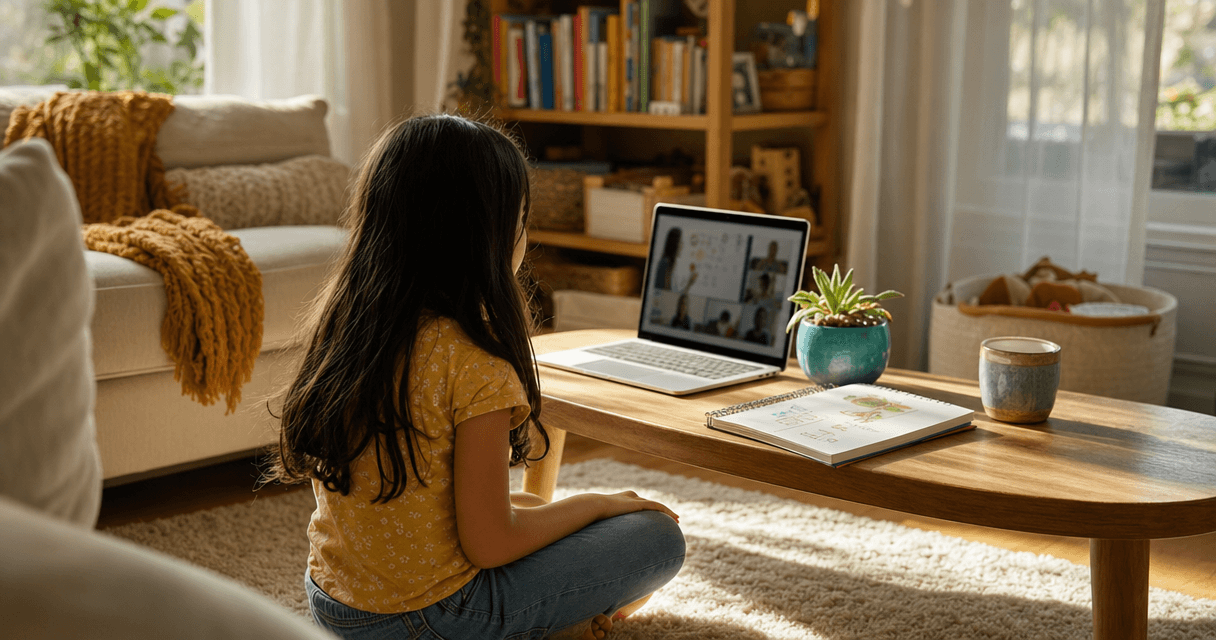
The benefits of early exposure to Spanish are profound and long-lasting. Children who start learning Spanish between ages 5 and 12 develop stronger executive function, achieve native-like pronunciation more easily, and build cognitive advantages that extend far beyond language itself. This window represents a unique opportunity when the brain is exceptionally receptive to new languages, making learning feel natural rather than forced.
Key takeaways
- Bilingual children show measurably stronger memory, focus, and problem-solving skills than their monolingual peers.
- Starting Spanish before age 7–8 dramatically increases the likelihood of native-like pronunciation and accent.
- Early language learners develop cognitive flexibility that helps them adapt, switch tasks, and think creatively.
- Spanish fluency opens career doors and earning potential that compounds over a lifetime.
- The brain's language-learning window remains open through late adolescence, but earlier is easier.
Your child's brain is wired for this right now
Your child's brain is doing something remarkable between ages 5 and 12. Research shows that during early childhood, the brain is in its most flexible stage for language acquisition, a period neuroscientists call heightened neuroplasticity. During this window, children absorb sounds, structures, and grammar rules with an ease that adults can only envy.
By 6 months of age, infants show preferences for phonemes in their native language, and by the end of their first year they no longer respond to phonetic elements peculiar to non-native languages. But the window doesn't slam shut. Children remain highly skilled at learning new languages well into their school years. The key is starting while the brain is still building its language maps.
When your child hears Spanish regularly during this period, their brain doesn't just memorize vocabulary. It builds dual language systems that operate in parallel, strengthening the neural pathways involved in communication, memory, and attention.
The pronunciation advantage
One of the most striking benefits of early exposure is pronunciation. Children can learn to speak a second language without accent and with fluent grammar until about age 7 or 8. After this age, performance gradually declines no matter the extent of practice or exposure.
This happens because young children's brains are still tuning their auditory systems. They can hear and reproduce the subtle differences in sounds that adults often miss. A 10-year-old learning Spanish will pick up the rolled R and the soft J far more easily than a 30-year-old, simply because their brain is still wired to distinguish and produce those sounds.
That native-like accent becomes part of who they are. It's a gift that lasts a lifetime and signals fluency in a way that vocabulary alone never can.
Cognitive benefits that go far beyond Spanish
The benefits of early exposure to Spanish aren't limited to language skills. Bilingual children outperform monolingual children on executive function tasks, the high-level cognitive processes that control attention, memory, and problem-solving.
Stronger memory and focus
When your child learns Spanish, they're constantly holding two languages in mind, deciding which one to use, and switching between them. This process strengthens working memory and improves attention control. Bilingual children have been shown to have better working memory compared to their monolingual peers, which translates to stronger performance across all academic subjects.
Better problem-solving and cognitive flexibility
Bilingual children develop what researchers call cognitive flexibility — the ability to switch between tasks, adapt to new situations, and think about problems from multiple angles. Research published in PMC found that bilingual toddlers as young as 24 months outperformed monolingual peers on conflict tasks, which require inhibiting a dominant response and choosing a novel one.
This isn't abstract. It's the skill that helps your child adjust when plans change, tackle math problems in new ways, and navigate social situations with empathy and creativity.
Academic performance
Children who acquire language skills early often perform better academically. Proficiency in a second language enhances reading comprehension, writing abilities, and overall communication skills. Bilingual children also have an advantage in learning additional languages later, as they already possess a robust linguistic foundation.
The career and economic advantage
You're not just investing in your child's present. You're investing in their future. Spanish is the second most-spoken language in the United States, with nearly 42 million people speaking it at home. Globally, there are over 490 million Spanish speakers.
That means Spanish fluency isn't a novelty. It's a career asset.
Bilingual employees in the median pay range earn about $8,738 more per year than their monolingual counterparts. Over a 40-year career, that difference compounds into hundreds of thousands of dollars. And that's just the wage premium — it doesn't account for the doors that open when your child can communicate with clients, colleagues, and communities that monolingual candidates can't reach.
Whether your child ends up in healthcare, education, business, government, or technology, Spanish will set them apart.
Why starting early makes it easier
Adults can learn Spanish. But they have to work harder for it. Studies show that children exposed to a second language early, roughly before puberty, are more likely to develop native-like pronunciation and intonation. Adults rely on deliberate strategies like memorization and grammar drills. Children absorb language the way they absorb everything else — through play, conversation, and repetition.
When your child learns Spanish now, it doesn't feel like school. It feels like talking to a teacher they love, playing games, singing songs, and discovering that they can say new things. That joy is what makes it stick.
What this means for you
Understanding the benefits of early exposure to Spanish can guide you in making informed decisions for your child's education. You don't need to be fluent yourself. You don't need to overhaul your home. You just need to give your child consistent, high-quality exposure to Spanish with a teacher who knows how to make it engaging.
That's where the right learning environment makes all the difference. Your child needs a native-speaking teacher who can model correct pronunciation, a 1-on-1 setting where they can't hide, and a curriculum that meets them where they are and moves them forward week by week.
When you choose a program that prioritizes real conversation over worksheets, your child doesn't just learn Spanish. They become a Spanish speaker. And that identity — bilingual, confident, curious — is something they'll carry with them for life.
If you're ready to give your child the cognitive, social, and economic advantages that come with early Spanish learning, Spanish For Us offers 1-on-1 classes with dedicated native-speaking teachers who make learning feel like play. Your child will build fluency, confidence, and a love for the language that lasts.
Sources
- Brain Development and Mastery of Language in the Early Childhood Years — IDRA, 2018
- Advantages of a bilingual brain — Michigan State University Extension
- Early Language Learning and Literacy: Neuroscience Implications for Education — PMC
- Bilingual children outperform monolingual children on executive function tasks far more often than chance — ScienceDirect, 2023
- The effects of bilingualism on toddlers' executive functioning — PMC
- The Development of Language: A Critical Period in Humans — NCBI Bookshelf
- Early Language Learning in Childhood Education: Key Benefits and Developmental Impact — Deecyda, 2025
- 5 Career Benefits of Mastering the Spanish Language — UT Permian Basin Online, 2025
- It's never too late to learn a language – adults and kids bring different strengths to the task — The Conversation, 2026
Frequently Asked Questions
What if my child is already 10 or 11 — is it too late?
It's not too late. While starting earlier offers the easiest path to native-like pronunciation, children up through late adolescence can still achieve high fluency and strong cognitive benefits. The key is consistent, engaging instruction. A 10-year-old with the right teacher can make remarkable progress and still develop excellent Spanish skills.
How much exposure does my child need each week?
Consistency matters more than volume. Two to three 30-minute classes per week with a dedicated teacher, combined with occasional Spanish songs or books at home, is enough to build real fluency over time. The brain needs regular input to form strong language pathways, so weekly rhythm is more important than marathon sessions.
Will learning Spanish confuse my child or slow down their English?
No. Research consistently shows that learning a second language does not negatively impact a child's native language. In fact, bilingual children often outperform monolingual peers in English reading skills. The brain builds separate language systems, and the cognitive workout strengthens overall language ability.
Do I need to speak Spanish at home for this to work?
You don't. Many of the most successful bilingual children come from English-only homes. What matters is that your child has regular, high-quality exposure to Spanish with a fluent speaker — like a dedicated teacher in 1-on-1 classes. You can support learning by celebrating their progress, but fluency at home isn't required.
How long before I see real progress?
Most parents notice their child using new Spanish words at home within the first few weeks. By three to six months of consistent classes, children typically move from single words to short phrases and sentences. Fluency is a journey, but the early wins — hearing your child count in Spanish or greet you with "¡Hola, mamá!" — come quickly.
Ready to get your child speaking Spanish?
Book a free 1-on-1 class with a native-speaking teacher. No commitment, no credit card.
Try a Free Class