What Are the Best Spanish Apps for Kids?
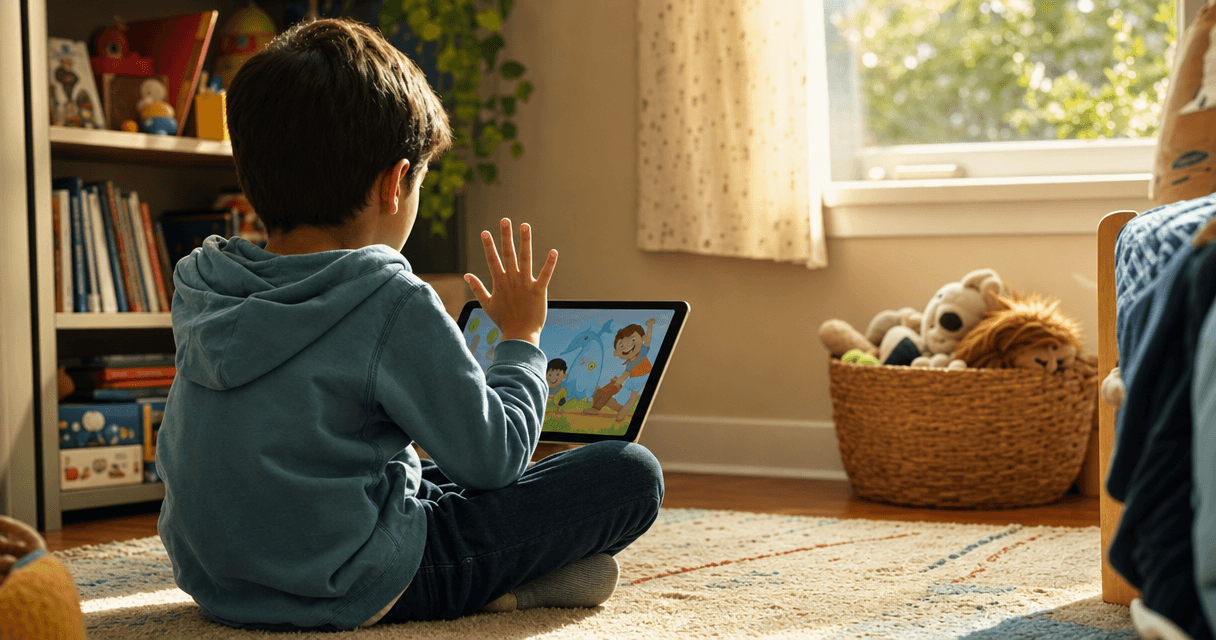
The best Spanish apps for kids—like Studycat's Fun Spanish, FabuLingua, and Endless Spanish—use games, stories, and songs to build vocabulary and listening skills. Research shows that interactive and engaging methods help children retain a new language more effectively. Apps work well for building foundational skills, but they can't replace the conversational practice your child needs to become fluent.
Key takeaways
- Spanish learning apps build vocabulary and listening skills through games and stories.
- Research found no significant differences between children learning Spanish with apps and those in traditional classrooms at elementary level.
- Apps are excellent for building vocabulary and grammar, but speaking practice with humans remains irreplaceable for fluency.
- Pediatric guidelines recommend limiting screen time to one hour per day of high-quality programming for children ages 2 to 5.
- The most effective approach combines apps for daily practice with live conversation with a native-speaking teacher.
How Spanish learning apps help kids
Spanish learning apps offer structured, bite-sized lessons that fit into your family's busy schedule. Your child can practice on the way to school, during downtime at home, or while waiting for soccer practice to start. The best apps use colorful animations, music, and games to keep kids engaged.
Studies suggest that inbuilt narration is helpful for pre-readers' story comprehension and learning new words in a second language when using apps independently. Apps also let your child learn at their own pace, repeating lessons as many times as needed without feeling rushed or embarrassed.
The gamification works. Kids earn points, unlock levels, and collect rewards, which makes daily practice feel like play rather than homework. That consistency builds a strong vocabulary foundation.
Top features to look for
When evaluating Spanish apps for your child, prioritize these features:
- Native speaker audio — so your child hears correct pronunciation from the start
- Age-appropriate content — lessons designed for kids, not adults
- Progress tracking — so you can see what your child is learning
- Offline access — for car rides, flights, and places with spotty Wi-Fi
- No ads or in-app purchases — fewer distractions, safer experience
Why apps alone don't create fluency
Apps are excellent at teaching vocabulary and grammar patterns. Research found that 75% of learners who studied for at least 15 hours increased at least one proficiency sublevel. But there's a ceiling.
Your child can memorize hundreds of words and complete dozens of lessons, yet still struggle to hold a real conversation. Apps teach isolated sentences—"Where is the bathroom?" and "I like this restaurant"—but they don't teach how real people transition between topics, use filler words, or adjust tone mid-conversation.
Apps primarily rely on passive learning through repetition and memorization, and they don't provide an opportunity for real-time interaction, which is critical for mastering a language. Your child needs a human who will wait when they're searching for a word, gently correct mistakes, and celebrate small victories. That's what builds confidence.
The screen time question
You're already managing screen time limits for games, YouTube, and everything else. Adding another app to the rotation is a real concern.
The American Academy of Pediatrics updated its guidance to focus on quality, context, and conversation rather than simple time limits. Educational apps count differently than passive scrolling, but they still take time away from physical play, face-to-face conversation, and hands-on learning.
If you're using an app, keep sessions short—15 to 20 minutes—and sit with your child when possible. Ask what they learned. Have them teach you a new word. That turns screen time into a shared experience rather than a solo activity.
How to use apps as part of a complete learning plan
Apps work best when they're one piece of a broader strategy. Think of them as the daily practice that reinforces what your child learns in conversation with a teacher.
Here's a realistic weekly rhythm:
- Two or three 30-minute classes with a dedicated native-speaking teacher who knows your child's name, interests, and exactly where they are in their learning
- 15 minutes of app practice on off days to reinforce vocabulary and keep Spanish top of mind
- Casual Spanish exposure through songs, books, or short videos your child enjoys
The teacher builds conversational fluency. The app builds vocabulary. The songs and books make Spanish feel like part of everyday life. All three work together.
What parents tell us
Parents who combine apps with live classes see faster progress and better retention. Their kids don't just recognize words—they use them. They don't just complete lessons—they look forward to talking to their teacher every week.
One mom told us her daughter used an app for six months and learned plenty of nouns. But it wasn't until she started weekly classes that she began forming sentences and actually speaking. The app gave her the building blocks. The teacher showed her how to use them.
Choosing the right app for your child
If you decide to add an app to your child's routine, start with a free trial. Let your child try two or three options for a week and see which one they open on their own. That's the one that will stick.
Look for apps that feel playful rather than drill-heavy. Your child should be exploring, discovering, and having fun—not grinding through flashcards. The best apps use stories, characters, and adventures to teach language in context.
And remember: the app is the supplement, not the solution. Your child will speak Spanish when they have a teacher who knows them, encourages them, and gives them space to practice out loud every single week.
If you're ready to move beyond apps and give your child the conversational practice they need, Spanish For Us pairs your child with a dedicated native-speaking teacher for fun, personalized 1-on-1 classes. Book a free trial class and see the difference a real teacher makes.
Sources
- The Best Spanish Learning Apps, Books, and Games for Kids — Spanish Academy, February 2025
- A user evaluation of the busuu app — Fernando Rosell-Aguilar, Open University Research Online
- Which Mobile Application Features Support Children's Language and Literacy Learning? — Oxford Education Deanery, November 2025
- How effective are language learning apps? — ScienceDaily, February 2026
- Updated AAP recommendations for screen time — CHOC Children's Health Hub, February 2026
- Screen time and children: How to guide your child — Mayo Clinic
- 10 Best Language Learning Apps in 2026 — Wordy, March 2026
- Why Language Apps Aren't Enough — inlingua, April 2026
Frequently Asked Questions
Can my child become fluent using only an app?
Apps build vocabulary and grammar, but fluency requires real conversation. Your child needs practice with a human who can respond, correct mistakes gently, and adjust the conversation in real time. Apps are excellent for daily reinforcement, but they can't replace the back-and-forth of speaking with a native teacher.
How much time should my child spend on a language app each day?
Fifteen to twenty minutes a day is enough for most kids. Longer sessions lead to fatigue and distraction. Consistency matters more than duration—short, daily practice builds stronger habits than marathon sessions once a week.
Are free apps as effective as paid ones?
Free apps often include ads, which distract kids and interrupt learning. Paid apps typically offer better content, progress tracking, and a safer experience. If budget is a concern, try a free trial of a paid app first to see if your child engages with it before committing.
What if my child gets bored with the app after a few weeks?
That's common. Apps rely on novelty, and once the rewards and animations feel repetitive, kids lose interest. This is a sign your child is ready for something more dynamic—like live classes with a teacher who can adapt lessons to their interests and keep them engaged week after week.
Ready to get your child speaking Spanish?
Book a free 1-on-1 class with a native-speaking teacher. No commitment, no credit card.
Try a Free Class