What Are the Best Spanish Books for Kids?
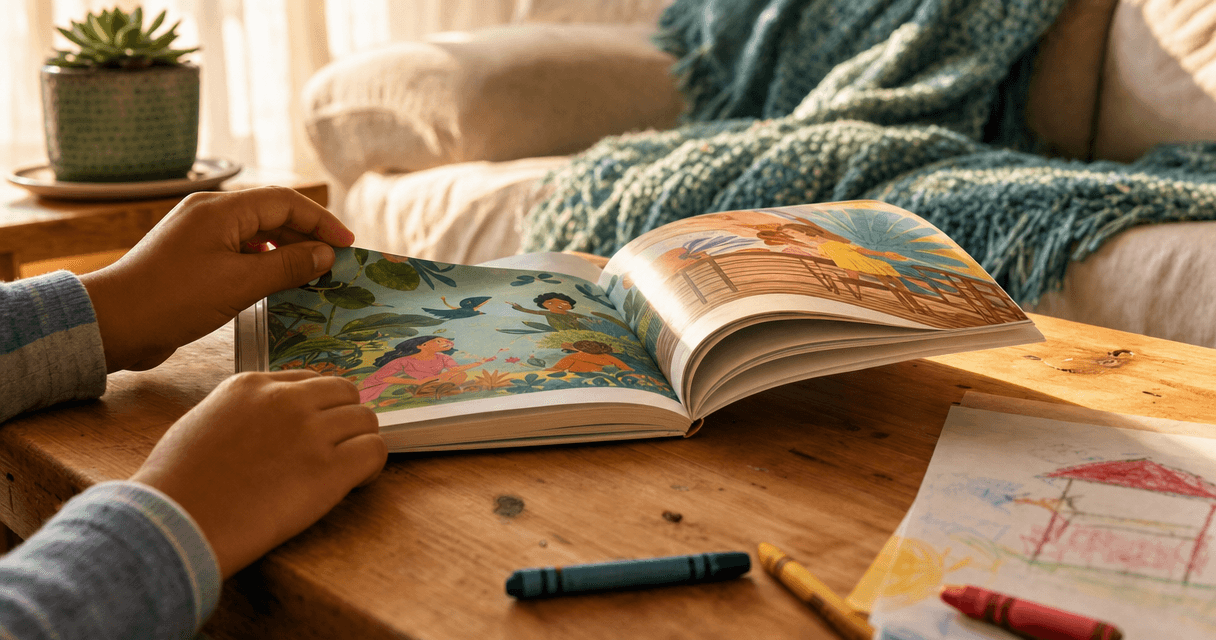
The best Spanish books for kids are those that connect them to their heritage while building genuine language skills. Look for authentic titles written by native Spanish-speaking authors, culturally rich stories that reflect your family's background, and books that match your child's reading level—whether they're just starting out or already reading chapter books. High-quality bilingual and Spanish books help build a solid foundation for Spanish literacy while affirming a child's cultural identity.
Key takeaways
- Authentic Spanish books written by native authors offer richer language and cultural representation than most translations.
- Reading in Spanish strengthens your child's heritage language skills and supports their English literacy development.
- Books that reflect your family's specific cultural background help your child see themselves and their community in literature.
- Spanish phonological awareness gained through reading transfers directly to English reading skills, giving bilingual children cognitive advantages.
- Age-appropriate books—from board books to chapter books—keep children engaged and build confidence at every stage.
Why Spanish books matter for heritage kids
Your child's connection to Spanish isn't just about vocabulary. It's about identity, family, and belonging. Books with cultural representation support a positive cultural identity in ways that worksheets and apps never will.
When your child reads a story where the main character visits abuela, celebrates Día de Muertos, or navigates life between two languages, they see themselves. That recognition matters. It tells them their experience is real, valued, and worth celebrating.
Research shows that children's experiences with spoken and written Spanish make direct and positive contributions to their literacy in English, the primary language of reading instruction in U.S. schools. Reading in Spanish isn't taking time away from English—it's strengthening the foundation for both.
What makes a great Spanish book for kids
Authentic voice and language
Authentic Spanish picture books tend to have a more lyrical, natural feel than translations. The rhythm, the word choice, the cultural references—they come from someone who grew up inside the language.
Look for books originally written in Spanish by Latinx authors. Check the copyright page. If it says "Translated from the English," it's not authentic. If it lists a Spanish-speaking country as the place of publication or credits a native author, you've found something real.
Cultural authenticity
Seek out books written by Latinx authors whose native language is Spanish. These authors bring lived experience to the page. They know the difference between a piñata at a birthday party and a piñata as a symbol of something deeper. They understand that not all Spanish-speaking families are the same—a Mexican-American family in Texas and a Puerto Rican family in New York share language but not necessarily traditions.
Check the text for regional vocabulary. Some words from Spain may be unfamiliar to families from Mexico or Central America. That's not bad—it's an opportunity to talk about the richness of Spanish across countries. But know what you're getting.
Age and level appropriateness
A book that's too hard will frustrate your child. A book that's too easy will bore them. Match the book to where your child actually is, not where you wish they were.
- Ages 0–3: Board books with simple words, repetition, and bright pictures. Look for Indestructibles series in Spanish or bilingual baby books that name everyday objects.
- Ages 4–7: Picture books with short sentences, engaging illustrations, and stories about family, animals, or daily life. Authors like Jorge Argueta, Yuyi Morales, and Pat Mora are excellent starting points.
- Ages 8–12: Chapter books, graphic novels, and longer picture books with more complex plots. Kids at this stage can handle books that explore identity, history, and adventure.
Recommended Spanish books by age
For toddlers and preschoolers (ages 0–4)
- Arrorro, Mi Niño: Latino Lullabies and Gentle Games by Lulu Delacre — Traditional rhymes and songs from across Latin America, presented in both Spanish and English.
- Singing / Cantando De Colores (Lil' Libros series) — Bilingual board books that introduce first concepts through song and color.
- Nochecita / Little Night by Yuyi Morales — A sweet bedtime story about Mother Sky helping her daughter get ready for bed.
For early readers (ages 5–8)
- La Lagartija y el Sol by Alma Flor Ada — A retelling of an Aztec legend about a small lizard who finds the sun.
- Cuentos que Contaban Nuestras Abuelas by F. Isabel Campoy and Alma Flor Ada — A collection of 12 classic folktales from the Spanish-speaking world.
- Esperando el Biblioburro by Monica Brown — The true story of a teacher in Colombia who brings books to children in rural villages on the backs of two donkeys.
- Magia: En una Tierra muy Lejana by Mirelle Ortega — A celebration of family and culture that encourages children to believe in the magic of their heritage, set on a pineapple farm in Veracruz, Mexico.
For confident readers (ages 9–12)
- El Chocolate de Abuela — When abuela visits from Mexico, she brings stories and treasures that share the rich traditions and customs of her homeland.
- Coco: Miguel y la Gran Armonía by Matt de la Peña — An original story based on the beloved Pixar film, exploring family, memory, and music.
- Chapter book series like En Alas del Cóndor — Stories about the history and culture of Spanish-speaking places, written for children who are ready for longer narratives.
Where to find quality Spanish books
Your local library is your best free resource. Many public libraries now have robust Spanish-language collections. If yours doesn't, ask—they can often order titles or access them through interlibrary loan.
Online, look for:
- Lorito Books — A vendor specializing in authentic and translated children's books in Spanish.
- Lee & Low Books — A publisher committed to culturally authentic bilingual and Spanish titles.
- Colorín Colorado — A bilingual site for educators and families with curated book lists and literacy resources.
Avoid Amazon's algorithm if you can. It will serve you the bestsellers, which are often English books translated into Spanish, not authentic Spanish literature. Go to the sources above first.
How to use Spanish books at home
Reading together is more powerful than reading alone. Sit with your child. Point to pictures. Ask questions. Let them ask you questions.
If your Spanish isn't fluent, that's okay. You're modeling that learning a language is a process, not a performance. Read the same book multiple times. Repetition builds fluency.
Talk about the words. When you come across a word your family uses differently, celebrate it. "In our house we say 'carro,' but this book says 'coche.' Both are right!" This validates the Spanish spoken by parents and caregivers at home and teaches your child that language is alive and regional.
Make books part of your routine. Before bed. After school. On Sunday mornings with a stack of picture books and hot chocolate. The ritual matters as much as the reading.
As your child connects with their roots, the right book can be the spark that turns curiosity into pride and pride into fluency. Start with one book. Read it together. Then find another. You're not just teaching Spanish—you're handing your child a key to their own story.
If you want your child to go beyond reading and start speaking Spanish with confidence, Spanish For Us pairs kids with native-speaking teachers who make every class feel like time with a favorite tía—warm, engaging, and impossible to forget.
Sources
- Authentic Spanish List — Lee & Low Books
- The effects of Spanish heritage language literacy on English reading for Spanish–English bilingual children in the US — PMC, 2019
- Spanish Storytime — Colorado Libraries for Early Literacy
- The Ultimate Guide to the Best Authentic Spanish Books for Kids — Spanish Mama, 2025
- Bilingual Books for Young Children: Spanish — Colorín Colorado, 2024
- 22 Bilingual and Spanish Picture Books Perfect for Storytime, Read-Alouds, and More — School Library Journal, 2023
Frequently Asked Questions
Should I choose bilingual books or Spanish-only books for my child?
It depends on your child's Spanish level and your family's goals. If your child is just starting out or you want to read together and your own Spanish is limited, bilingual books let you both follow along. If your child already understands some Spanish and you want to build immersion, Spanish-only books push them to rely on context clues and illustrations, which strengthens comprehension. A mix of both works well for most families.
What if the Spanish in a book uses different words than my family uses?
That's actually a gift. Spanish varies across countries and regions—what's called "carro" in one place is "coche" in another. When you come across a different word, point it out and celebrate it. Say, "In our family we say X, but this book says Y. Both are right!" It teaches your child that language is rich and flexible, and it validates the Spanish you speak at home.
How many Spanish books should my child read each week?
Consistency matters more than quantity. Even one book read together three or four times a week builds vocabulary and confidence. Repetition is powerful—kids absorb new words and sentence structures when they hear the same story multiple times. Aim for daily exposure if you can, even if it's just five minutes before bed.
Can reading Spanish books really help my child's English reading too?
Yes. Research shows that phonological awareness and reading skills developed in Spanish transfer directly to English, especially for children learning both languages. Reading in Spanish strengthens the cognitive foundation for literacy in general. Your child isn't splitting their brain between two systems—they're building one strong reading brain that works in both languages.
Where can I find Spanish books if my local library has a limited selection?
Ask your library to order specific titles or access them through interlibrary loan—most librarians are happy to help. Online, check out Lorito Books, Lee & Low Books, and Colorín Colorado for curated lists of authentic Spanish titles. You can also look for Spanish book subscription boxes that deliver age-appropriate books to your door each month.
Ready to get your child speaking Spanish?
Book a free 1-on-1 class with a native-speaking teacher. No commitment, no credit card.
Try a Free Class