Does Duolingo Actually Work for Kids? An Honest Look
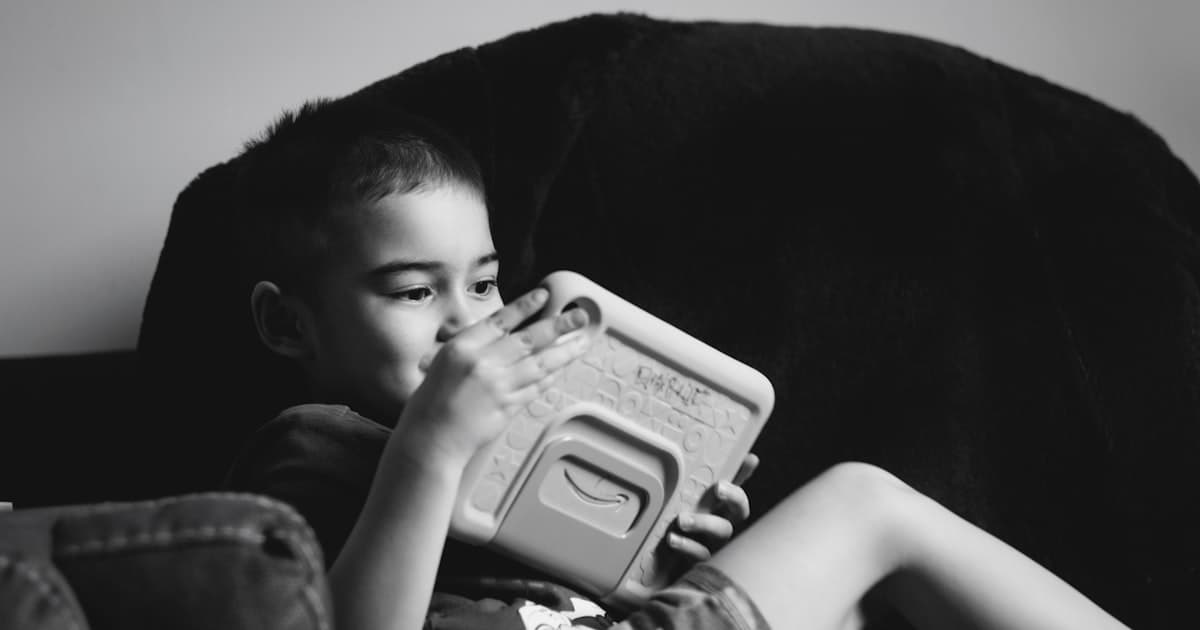
Duolingo can help your child build a small Spanish vocabulary and recognize common words, but it rarely produces a child who can actually hold a conversation. The app is built for solo, gamified practice. The back-and-forth talking that turns understanding into real speaking happens only with another person. For kids ages 5–12, Duolingo works fine as a side activity, but it should not be the main plan if you want your child to speak Spanish.
What Duolingo Does Well for Kids
Duolingo is genuinely good at a few things. It builds early vocabulary recognition. It rewards a daily habit through streaks and points. And it is free, which makes it easy to try.
For a child who already has a strong Spanish foundation, the app can be a fun way to keep words fresh between classes or over the summer.
The problem starts when parents expect Duolingo to do the heavy lifting on its own.
Where Duolingo Falls Short for Kids
The main Duolingo app was designed for adults and teens. Its lessons assume a reader who can sit still, follow on-screen text, and stay motivated by a green owl reminding them about a streak. Most 6, 8, or 10-year-olds are not that reader.
Three specific gaps matter for kids:
No real conversation. Duolingo gives your child sentences to translate and tap. It does not give them a person to talk to. Speaking — out loud, to another human, in real time — is the part of language learning that actually builds fluency.
No correction or feedback. When your child mispronounces a word or builds a sentence the wrong way, the app moves on. A teacher would catch it, fix it gently, and circle back next week. The app cannot.
No relationship. Kids learn language faster when they care about the person they are talking to. A streak is not a relationship. A teacher who knows your child's name, their dog, and their favorite Marvel character is.
Why Kids Quit Duolingo Within a Few Weeks
If you have watched your child download Duolingo, do five lessons in a weekend, and then forget about it, you are not alone. Most kids drift off the app within a few weeks. The reason is simple.
Apps rely on internal motivation. Kids ages 5–12 do not have much of that yet, especially for something as effortful as a new language. They need an adult presence — someone who shows up, expects them, and notices their progress. The app cannot replicate that.
Pediatric language research has shown for years that young children learn language primarily through live social interaction, not from screens. Patricia Kuhl's well-known research at the University of Washington found that infants exposed to a new language through a real person picked up sounds quickly, while infants exposed to the same content on video learned almost nothing. The brain treats screens and people very differently when it comes to language.
That effect softens with age, but the underlying point holds. A person teaching your child will always beat an app talking at them.
What Actually Works for Kids Ages 5–12
If your goal is for your child to speak Spanish — not just recognize a few words — the structure that works is this:
- A consistent weekly class with the same teacher
- A native-speaking teacher who models real pronunciation
- Real 1-on-1 attention so your child has to talk, not hide
- A curriculum with clear progression so you can see growth
That is the model behind our 1-on-1 Spanish classes at Spanish For Us — the same teacher every week, in a 30-minute Zoom class designed for your child's age and level.
Apps can supplement that. They cannot replace it.
Should You Delete Duolingo?
No. If your child enjoys the streak and uses the app on their own, keep it. It builds a small habit, and habits matter.
Just do not confuse the streak with progress. A child can have a 200-day Duolingo streak and still freeze when their abuela asks them a simple question in Spanish. Speaking is a separate skill, and it only develops with another human.
The simplest setup we see working for our families:
- Once a week: a 30-minute live class with a dedicated teacher
- Daily: 5–10 minutes of Duolingo or another app for vocabulary review
- Weekly: a short conversation at home, even just a few sentences
The class drives the speaking. The app reinforces words. The home practice cements the habit.
If you have spent months hoping an app would do the work, that is not your fault. The app was never built for that. Putting your child in front of a real teacher once a week is the change that finally makes Spanish stick.
At Spanish For Us, every class is 1-on-1 with the same native-speaking teacher each week. The whole format is built around getting your child to actually talk. Book a free class and see the difference in 30 minutes.
Sources
- Patricia K. Kuhl, The Linguistic Genius of Babies — TED Talk on early language acquisition and social learning
- Patricia K. Kuhl, Institute for Learning & Brain Sciences, University of Washington
Ready to get your child speaking Spanish?
Book a free 1-on-1 class with a native-speaking teacher. No commitment, no credit card.
Try a Free Class