How to Incorporate Spanish into Everyday Activities at Home
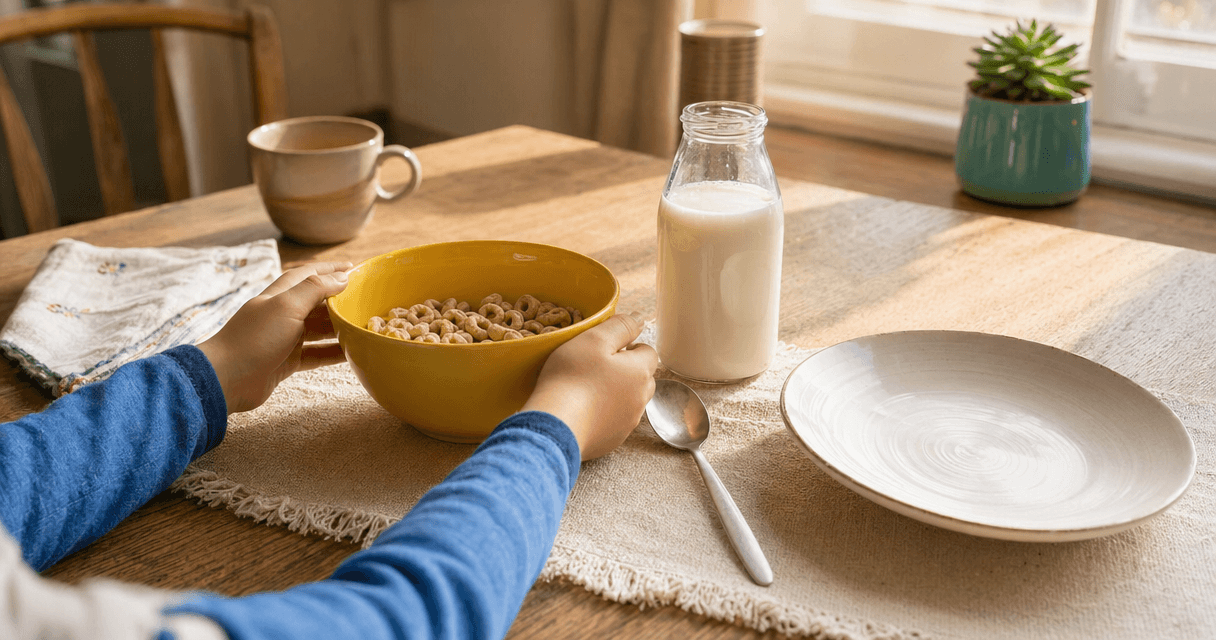
When you incorporate Spanish into everyday life, you create the consistent exposure your child needs to truly absorb the language. Research shows that children who receive daily input in a second language—even just an hour a day—develop stronger vocabulary, grammar, and conversational skills than those with sporadic weekend-only exposure. The key is making Spanish a natural part of your family's rhythm, not an extra task on your to-do list.
Start with Morning Routines
Your child's morning routine is full of opportunities for Spanish practice. Label common objects around the house—espejo on the bathroom mirror, cepillo de dientes on the toothbrush holder, ropa on the dresser. Visual input like this builds recognition and helps kids connect print with meaning, a huge literacy booster for bilingual learners.
As your child gets dressed, name each item of clothing in Spanish. "¿Dónde está tu camisa azul?" "Ponte los zapatos." These simple, repetitive phrases become automatic over time. Speech-language pathologists emphasize that everyday activities like mealtimes, getting dressed, and playtime are all opportunities for quality language exposure—you don't need formal lessons to make progress.
Turn Meals into Conversation Practice
Breakfast, lunch, and dinner are built-in language windows. Describe what you're preparing: "Voy a hacer huevos revueltos." Ask your child to help: "¿Me pasas la sal?" Talk about what's on their plate: "¿Te gusta el brócoli?"
The timing, exposure, quantity, and quality of language input significantly affect the rate and pattern of development in each language. Mealtimes offer all four. Your child hears Spanish, sees you use it in context, and practices responding—all while doing something they'd be doing anyway.
Cooking together is even more powerful. Follow a recipe in Spanish, measure ingredients together, and talk through each step. Children remember vocabulary better when they engage all their senses, and cooking delivers exactly that.
Use Music and Songs Throughout the Day
Play Spanish music during transitions—getting ready in the morning, driving to school, cleaning up toys. Music builds rhythm, pronunciation, and joyful memories that stick for years. Repetition in songs makes new vocabulary stick naturally, and the playful mood lowers any pressure to perform.
You don't need to be a great singer. Your voice—even off-key—helps your child feel the language with joy. Pick a few favorite songs and play them on repeat. Familiarity breeds confidence.
Make Screen Time Work for You
If your child watches TV or plays games, switch the language setting to Spanish. Let them watch their favorite show dubbed in Spanish or add Spanish subtitles. Using apps, movies, and TV to increase the amount of time your child spends engaging in the immersion language is one of the easiest ways to boost daily exposure without adding to your workload.
The key is choosing content they already love. When they know the storyline, they can focus on the language instead of struggling to follow the plot.
Read Together Every Single Day
Reading aloud in Spanish is non-negotiable if you want your child to develop strong language skills. Children need to have a lot of exposure to the sounds, words, and grammars of the languages they will one day use, and books deliver concentrated, high-quality input in a short amount of time.
Pick a consistent time—bedtime is ideal because it's already part of most families' routines. Even ten minutes a day makes a measurable difference. If your child is old enough to read independently, encourage them to read Spanish books on their own, but keep reading aloud together too. Hearing fluent pronunciation and expression models what good reading sounds like.
Play Games in Spanish
Games are one of the most effective ways to practice a language without it feeling like work. Play "Veo, veo" (I Spy), memory matching games with Spanish cards, or board games where you narrate every move in Spanish. "Es tu turno." "Saqué un cinco." "¡Gané!"
Creating low-pressure opportunities for practice through games helps children feel comfortable making mistakes, which is essential for learning. When kids are having fun, they forget to be self-conscious about their accent or grammar.
Establish a "Spanish Time" Block
Some families find success with the Time and Place strategy—designating specific times or places where only Spanish is spoken. Maybe it's Sunday mornings, bath time, or the car ride to soccer practice. This approach makes bilingual parenting accessible for monolingual and non-native families alike because it creates clear, manageable boundaries.
The consistency matters more than the duration. Twenty minutes of Spanish every single day beats three hours on Saturday and nothing the rest of the week. Children's brains need regular input to build neural pathways—distributed practice over time is far more effective than cramming.
Connect with Spanish Speakers
If possible, arrange playdates with Spanish-speaking families, schedule video calls with Spanish-speaking relatives, or hire a babysitter who speaks Spanish. Community and peers are powerful motivators for language use. When your child sees that Spanish is a real tool for connection—not just something Mom makes them practice—they're far more likely to engage.
If you don't have access to a Spanish-speaking community in person, online options work too. A weekly 1-on-1 class with a native-speaking teacher gives your child a reason to use what they're learning at home in real conversation.
Be Consistent, Not Perfect
You don't need to speak perfect Spanish to create a Spanish-rich environment. You don't need to spend hours planning activities. What your child needs is consistent exposure, encouragement, and a parent who believes they can do this.
Research consistently shows that the amount of daily exposure to a second language predicts vocabulary and grammar development in bilingual children. An hour a day—spread across morning routines, meals, playtime, and bedtime—is achievable for most families. And it's enough to make a real difference.
Incorporating Spanish into everyday activities isn't about adding more to your plate. It's about making small, intentional choices that turn the time you already spend with your child into language-learning opportunities. Over time, those small moments add up to fluency.
If you're ready to give your child consistent, high-quality Spanish practice with a teacher who makes it fun, Spanish For Us offers 1-on-1 classes tailored to your child's level and interests. Book a free trial and see how much progress your child can make when learning feels like play.
Sources
- Language Learning for Kids: Practical Guide for Parents — Migaku, 2026
- You're Doing Better Than You Think: 10 Everyday Wins for Bilingual Parents — Bilingual Balance, 2025
- Tips for Parents Raising Bilingual Children: When the Home Language Differs From the Community Language — American Speech-Language-Hearing Association, 2012
- THE EARLY YEARS: Dual Language Learners — WIDA
- Eight Ways to Support Your Children in Language Immersion — Participate Learning, 2024
- Bilingualism in the Early Years: What the Science Says — PMC
- Understanding Second Language Acquisition: A Comprehensive Guide for Parents and Teachers — Edu.com, 2025
- Children Learning a Second Language Dos and Don'ts — Connections Academy, 2023
- Are the Effects of Variation in Quantity of Daily Bilingual Exposure and Socioeconomic Status on Language and Cognitive Abilities Independent in Preschool Children? — PMC, 2020
- How to Raise a Bilingual Child with the Time and Place Method — Language Learning At Home, 2021
Frequently Asked Questions
How much Spanish exposure does my child need each day to make progress?
Research suggests children need at least an hour of daily exposure to a second language to develop conversational fluency within 6 months to 2 years. That hour doesn't have to be all at once—it can be spread across morning routines, meals, playtime, and bedtime. Consistency matters more than duration.
What if I don't speak Spanish fluently myself?
You don't need to be fluent to create a Spanish-rich environment. Use music, labeled objects, books, and screen time in Spanish to provide input your child can absorb. You can also learn alongside them. For conversation practice with a fluent speaker, consider a weekly 1-on-1 class with a native-speaking teacher who can model natural pronunciation and grammar.
Should I correct my child's Spanish mistakes?
Gentle correction is fine, but avoid over-correcting. Instead of saying "No, that's wrong," model the correct phrase naturally. If your child says "Yo quiero agua," respond with "Sí, aquí está tu agua." This technique, called recasting, reinforces correct usage without making your child feel self-conscious or afraid to speak.
What if my child resists speaking Spanish at home?
Resistance is common, especially if your child associates Spanish with extra work. Make it fun—use games, music, and activities they already love. Give them a reason to use Spanish by connecting with Spanish-speaking friends or scheduling classes with a teacher they enjoy. When kids see Spanish as a tool for connection and fun, motivation follows.
Can weekend Spanish classes alone make my child fluent?
Weekend classes help, but they're not enough on their own. Children need regular, daily input to build strong language skills. Think of weekend classes as the structured lesson and daily home activities as the practice that makes it stick. Combining both gives your child the best chance at fluency.
Ready to get your child speaking Spanish?
Book a free 1-on-1 class with a native-speaking teacher. No commitment, no credit card.
Try a Free Class