What Are the Differences Between Spanish Dialects for Kids?
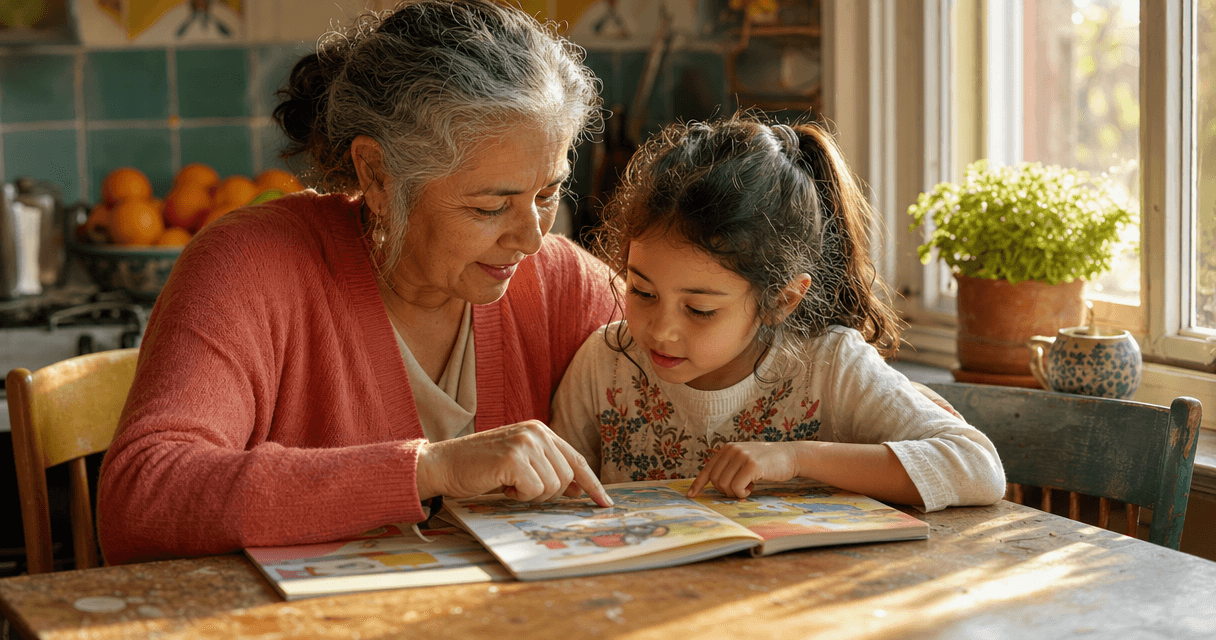
Your child can understand Spanish speakers from anywhere in the world. Spanish dialects differ in pronunciation, vocabulary, and some grammar, but they share the same foundation—and learning about these differences can deepen your child's connection to their heritage and build confidence in speaking.
Key takeaways
- All Spanish dialects are mutually intelligible—speakers from different regions understand each other.
- Pronunciation varies most noticeably between Spain and Latin America, especially with z, c, and ll sounds.
- Vocabulary differences reflect indigenous influences and regional culture, but core grammar remains consistent.
- Exposing your child to multiple dialects builds listening skills and cultural pride.
- Your family's specific dialect is a gift—it connects your child to their roots and community.
Why Spanish dialects exist
Spanish is spoken across more than 20 countries, from Mexico to Argentina to Spain. Over centuries, geographical isolation and indigenous language influences shaped distinct regional varieties. When your abuela says "carro" and your child's teacher says "coche," they're both right—they're just using the Spanish of their region.
These differences make Spanish richer. They reflect history, migration, and the creativity of millions of speakers adapting the language to their lives. For heritage learners, understanding dialects means understanding that Spanish belongs to many communities, including theirs.
The biggest pronunciation differences
The "th" sound in Spain
In most of Spain, the letters z and soft c are pronounced like the English "th" in "think"—so "gracias" sounds like "grathias." In Latin America, these same letters are pronounced as "s"—"gracias" sounds like "grasias." Both are correct Spanish.
Your child might notice this if they watch a show from Spain or meet a Spanish exchange student. It's not a lisp—it's simply how Castilian Spanish sounds.
The "sh" sound in Argentina and Uruguay
In Argentina and Uruguay, the letters ll and y are pronounced like the English "sh" sound. So "me llamo" becomes "me shamo" and "yo" sounds like "sho." This distinctive pronunciation is part of the Rioplatense accent and immediately recognizable to other Spanish speakers.
Dropped or softened sounds
In Caribbean Spanish and some coastal regions, the s at the end of words is often softened or dropped entirely. "Estás" might sound like "ehtá." In some areas, the final d in words like "Madrid" softens to "Madrí." These variations don't interfere with understanding—native speakers adjust quickly.
Grammar and vocabulary: small differences, big identity
Vosotros vs. ustedes
In Spain, there are two ways to say "you all": vosotros (informal) and ustedes (formal). In Latin America, only ustedes is used for both formal and informal situations. This affects verb endings—"you all speak" is "vosotros habláis" in Spain and "ustedes hablan" in Latin America.
For your child, this means if they learn Latin American Spanish, they won't use vosotros—and that's perfectly fine. Most Spanish speakers in the U.S. come from Latin American backgrounds, so ustedes is what they'll hear at home and in their community.
Vocabulary shaped by culture
The word for "car" is "carro" in most of Latin America but "coche" in Spain. "Computer" is "computadora" in Latin America and "ordenador" in Spain. Many vocabulary differences stem from indigenous language influences—words borrowed from Nahuatl in Mexico, Quechua in Peru, or Guaraní in Paraguay.
These aren't mistakes. They're cultural markers. When your child learns the word their family uses, they're learning a piece of their heritage.
All dialects are mutually intelligible
Here's the most important thing: different varieties of Spanish are just as mutually comprehensible as varieties of English. A Spanish speaker from Madrid may need a moment to adjust to Cuban or Argentine Spanish—just like an American adjusting to Australian English—but understanding happens quickly.
Spanish-language films and TV shows don't provide Spanish subtitles for different regions because they don't need to. Your child will be able to communicate with Spanish speakers from anywhere, regardless of which dialect they learn first.
Why dialect awareness builds confidence
When children understand that there are many "right" ways to speak Spanish, they stop worrying about sounding "wrong." Research shows that when heritage learners are judged for their dialect variance from a perceived standard, it results in a loss of self-esteem.
Your child's Spanish—whether it's Mexican, Puerto Rican, Colombian, or any other variety—is legitimate and valuable. Teaching them about dialects early helps them feel proud of how their family speaks.
Practical ways to expose your child to different dialects
- Watch shows from different countries. Let them hear how Spanish sounds in Spain, Mexico, Argentina, and Colombia.
- Point out differences without judgment. "Abuela says 'carro' and your teacher says 'auto'—both words mean car!"
- Celebrate your family's dialect. Name it explicitly: "We speak Mexican Spanish" or "Our family speaks Caribbean Spanish."
- Read books by authors from different regions. Notice vocabulary and expressions unique to each place.
- Connect with Spanish speakers from other backgrounds. Playdates, community events, and online classes all offer opportunities.
Your family's dialect is a gift
Language is essential to identity. When your child speaks the Spanish of their family—with the same accent, the same words, the same rhythm—they're claiming a piece of who they are. They're able to talk to abuela in the language she thinks in. They're part of a community that spans continents.
Dialect differences don't divide Spanish speakers—they enrich the language. Every variation carries history, culture, and the voices of millions of people. Your child doesn't need to choose one "correct" Spanish. They need to feel confident in the Spanish that connects them to you, to their family, and to their heritage.
That confidence comes from a teacher who understands heritage learners and celebrates the Spanish they bring to class. At Spanish For Us, our native-speaking teachers work with kids from all backgrounds, honoring each family's dialect while building fluency and pride.
Sources
- Spanish Variations — Enforex
- Spanish Dialects: Origin, Varieties — StudySmarter
- Latin American Spanish vs Spain Spanish — Busuu Blog
- The mutual intelligibility of Spanish dialects — Spanish Linguist
- Heritage language learning — Wikipedia
- Heritage Languages in Schools: A Story of Identity, Belonging and Loss — KQED
Frequently Asked Questions
Should I worry if my child's Spanish sounds different from their teacher's?
No. Dialect differences are natural and don't interfere with communication. Your child will benefit from hearing multiple accents—it builds listening flexibility and cultural awareness. As long as they're understood and understanding others, they're doing great.
Will learning one dialect confuse my child if they hear another?
Not at all. Children are remarkably good at adjusting to different accents and vocabulary. Exposure to multiple dialects actually strengthens comprehension skills. Think of it like hearing different English accents—your child adapts quickly.
Is one Spanish dialect better for kids to learn than another?
No dialect is superior. The best dialect for your child is the one that connects them to their family and community. If your family speaks Mexican Spanish, that's what matters most. A teacher who respects your family's variety while building fluency is ideal.
What if my child mixes words from different dialects?
That's completely normal and shows linguistic flexibility. Many bilingual families naturally blend dialects, especially in the U.S. As long as your child is communicating effectively and building confidence, mixing dialects is a sign of rich language exposure, not confusion.
How can I help my child feel proud of our family's Spanish dialect?
Name it explicitly and celebrate it. Say "We speak Puerto Rican Spanish" or "Our family's Colombian Spanish." Point out when they use a word or phrase that's special to your region. Let them hear you speak with pride, and they'll feel it too.
Ready to get your child speaking Spanish?
Book a free 1-on-1 class with a native-speaking teacher. No commitment, no credit card.
Try a Free Class