Why Your Child's School Spanish Class Isn't Enough
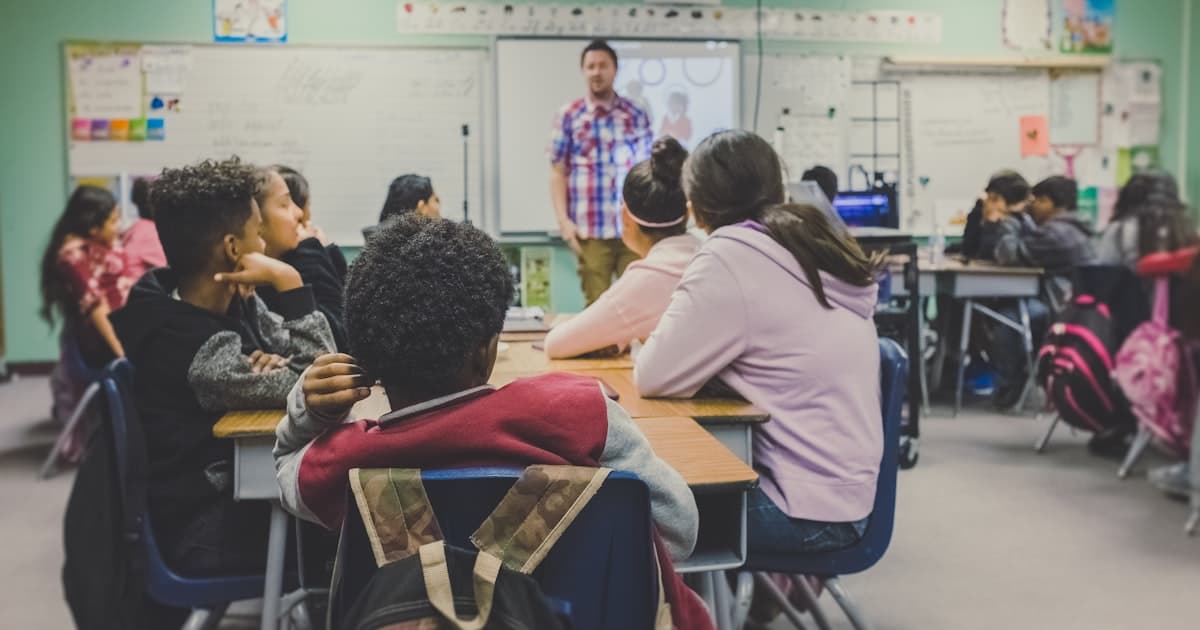
For most children, school Spanish is a helpful introduction, not a complete path to speaking confidently. Your child may learn vocabulary, colors, days of the week, and simple phrases at school, but that usually is not enough speaking practice to build real fluency. If you want your child to actually use Spanish in conversation, they need more personal attention, more chances to talk, and more consistency than a typical school class can provide.
If your child brings home Spanish worksheets but still freezes when asked a simple question, that does not mean they are bad at languages. It usually means the format is doing exactly what it was built to do: introduce Spanish to a whole class at once, not help one child speak with ease.
What school Spanish classes usually do well
School Spanish can absolutely be valuable. It gives your child exposure to the language. It can build familiarity with basic vocabulary, pronunciation, and classroom routines. It may also spark early interest, which matters.
For many families, school is the first place their child hears Spanish regularly outside the home. That is a good start. But a start is different from a system that moves your child toward confident conversation.
Why school Spanish often falls short
The biggest issue is not that schools do not care. The issue is that the structure works against the outcome most parents want.
ACTFL, one of the main organizations shaping language teaching standards in the U.S., defines interpersonal communication as active two-way communication and emphasizes that oral communication is central to language learning through meaningful interaction with others ACTFL Proficiency Guidelines 2024, ACTFL Communicative Tasks. In a typical school setting, your child may get limited chances to do that.
Too many children, not enough speaking time
When one teacher is responsible for a full classroom, every child gets only a small share of the time. Even a great teacher cannot give your child sustained speaking practice when twenty other children also need attention.
That means your child may spend most of class listening, repeating with the group, or filling out work rather than forming their own thoughts in Spanish. They may look like they are participating while still getting very little real practice.
The class has to move at the average pace
School classes are built for the group. If your child is shy, they can disappear into the background. If they are ahead, they may get bored. If they are behind, they may feel embarrassed and stop trying.
Your child does better when the pace matches their level. That is hard to do in a classroom that has to keep everyone moving together.
Coverage often replaces conversation
A classroom has goals, units, and limited time. That naturally pushes instruction toward memorizing lists, completing assignments, and preparing for quizzes. Those things can support learning, but they do not automatically lead to speaking.
Research on elementary language-class interactions has found that classrooms often center lower-level tasks like repeating information more than discussion or analysis, which limits how much children can apply language in meaningful ways Interaction levels fostered during Spanish language classes in elementary education students.
What your child actually needs to start speaking
To speak Spanish, your child needs to produce language regularly. They need to answer questions, ask questions, make mistakes, hear corrections, and try again. That kind of growth happens faster when a teacher can respond to your child in real time.
They also need emotional safety. Many children know more Spanish than they are willing to say out loud. A private class gives them space to try without worrying about classmates listening.
This is especially important if your child is already frustrated by school Spanish. Once a child starts thinking, "I'm not good at this," progress slows down. The right teacher can reverse that quickly by giving them small wins they can feel.
What works better than school Spanish alone
School Spanish works best as one part of the picture. If you want stronger results, your child needs a setting where they are expected to speak and supported closely when they do.
One-on-one classes create more language
In a 1-on-1 class, your child cannot fade into the background. They are involved the whole time. A teacher can adjust instantly, slow down when needed, and build on what your child already knows.
That is why families looking for visible progress often add 1-on-1 Spanish tutoring for kids instead of relying on school alone. More speaking time changes everything.
The same teacher each week builds confidence
Children open up faster when they know the person on the other side of the screen. A consistent relationship matters. Your child stops spending energy getting comfortable and starts using that energy to speak.
At Spanish For Us online Spanish classes for kids, your child works with a native-speaking teacher who gets to know their personality, pace, and confidence level over time. That consistency is hard to recreate in most school settings.
Short, steady practice beats occasional exposure
A little Spanish at school a few times a week may keep the language familiar. It usually does not create momentum on its own. Your child improves faster when Spanish becomes a regular habit instead of a subject they visit briefly.
Two focused classes each week can do far more than scattered exposure because your child is actively using the language, not just reviewing it.
How to tell if school Spanish is not enough for your child
Look for a gap between recognition and use. Your child may recognize words on a worksheet but struggle to answer a simple question out loud. They may get good grades but avoid speaking. They may remember vocabulary for a test and then forget it a week later.
Those are signs that your child needs more active speaking practice, not more pressure. The answer is usually not a harder worksheet. It is a better speaking environment.
The bottom line
School Spanish can introduce the language, but it usually does not give your child enough personal attention or enough speaking practice to build confidence on its own. If your goal is for your child to actually speak Spanish, they need regular conversation with a teacher who can focus on them.
That is where Spanish For Us helps. Your child gets 1-on-1 classes with a native-speaking teacher, real conversation practice, and the kind of consistency that turns school exposure into real progress.
Sources
Ready to get your child speaking Spanish?
Book a free 1-on-1 class with a native-speaking teacher. No commitment, no credit card.
Try a Free Class