A Parent-Teacher Meeting Plan for a Child Struggling in Spanish Immersion School
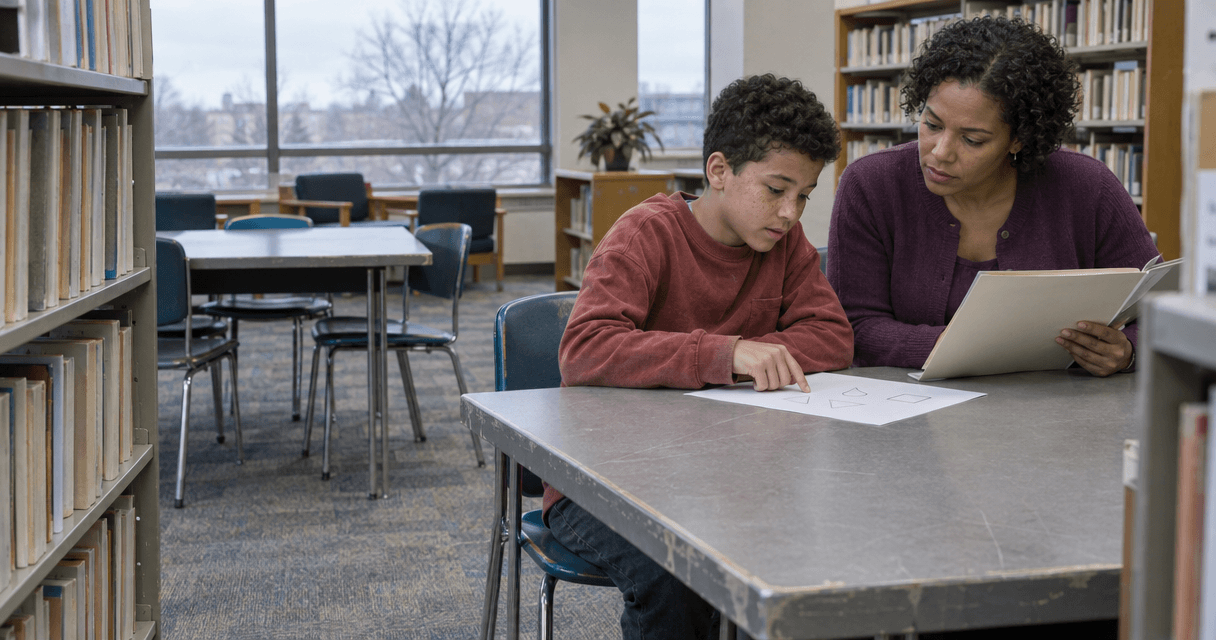
For a child struggling in Spanish immersion school, organize your parent-teacher meeting around four areas: classroom directions, subject knowledge, work samples, and available school support. Use the worksheet below to ask where the difficulty begins and agree on what the school will try next. Aim to leave with a written plan and a follow-up date.
Key takeaways
- Ask the teacher to identify the exact point where your child gets stuck during a classroom task.
- Discuss subject understanding separately from the Spanish needed to follow directions or explain an answer.
- Bring successful and difficult work, noting the help your child received on each sample.
- Request specific school supports, a person responsible for each action, and a date to review progress.
Prepare your meeting notes before you go
Sorting out language demands and learning difficulties in immersion can be complicated, as the University of Minnesota’s CARLA overview of immersion learning concerns explains. Treat this meeting as a chance to gather evidence; leave conclusions open while you and the teacher investigate.
Ask your child what feels difficult and what they want you to mention. Preparing questions and including your child’s perspective are also recommendations in Colorín Colorado’s parent-teacher conference checklist.
Fill in your starting point
Copy these prompts into a document or notebook. Use observations such as “waits until someone demonstrates the task” rather than a broad label such as “bad at Spanish.”
- One thing my child enjoys or does confidently: ______
- The task causing concern, and when I noticed it: ______
- My child’s description of the problem: ______
- What happens at home, including help and time needed: ______
Send your main concern ahead of time and ask the teacher to bring relevant classroom work. You can prepare your folder at home or in a quiet library corner; choose somewhere you can review it without rushing.
Worksheet 1: Understanding classroom directions
Start with a recent assignment. Ask the teacher to walk you through what your child was asked to do, including how the directions were delivered.
Use these questions to make the discussion specific:
- Does my child understand a single spoken direction? What happens when several steps are given together?
- Is the difficulty different with spoken and written directions?
- Can my child show the first step after watching a demonstration?
- Which Spanish words or phrases in the directions need more practice?
Record together: Task: ______. Direction that caused difficulty: ______. Support tried: ______. What my child did afterward: ______.
Ask for an example of understanding beyond a nod or “yes.” You might say, “Could you ask my child to show what comes first and note what happens?”
Worksheet 2: Understanding the subject itself
Ask the teacher to identify both the subject goal and the language required. WIDA’s guidance on integrating language and academic content recommends maintaining learning goals while adjusting support for language proficiency; its examples concern English development, so discuss appropriate adaptations with your Spanish immersion teacher.
Compare ways of showing the same idea
For a hypothetical subtraction assignment, ask: “Could my child demonstrate the calculation with counters, then explain the reasoning with language support?” Also ask whether an explanation in a stronger language would provide useful information, where appropriate to the task.
Keep these follow-up questions beside your notes:
- What subject knowledge has my child demonstrated independently?
- What remains difficult after the directions are clarified?
- Are you assessing the concept, the Spanish explanation, or both?
Record together: Subject goal: ______. Required Spanish: ______. Demonstrated understanding: ______. Unanswered question: ______.
Use any differences to guide the next classroom check. Avoid treating one successful demonstration or one difficult page as a final answer about your child’s needs.
Worksheet 3: Reviewing actual work samples
Bring one piece your child completed comfortably and one that caused difficulty. Include an unfinished example if you have one, and mark whether an adult translated, explained, or supplied an answer.
WIDA’s strengths-based approach to multilingual learning encourages educators to build on existing knowledge and abilities. Ask the teacher to identify a strength in the work alongside the concern.
Annotate the page together
Ask, “Where does the work first stop meeting the goal?” Then ask the teacher to distinguish among misunderstanding the task, difficulty with the concept, and difficulty expressing an answer in Spanish.
Record for each sample: Date and task: ______. Completed independently or with help: ______. Successful part: ______. First difficult point: ______. Teacher’s next check: ______.
Request a description of successful work for this assignment. Keep your child’s current work as the starting point for the next comparison.
Worksheet 4: Identifying available school support
Ask what the school can provide during the school day. Request details before deciding what extra practice to add at home.
Use these questions as a menu, choosing those that fit the concerns:
- Could the teacher try visual directions, a modeled example, or a brief check before independent work?
- Is targeted small-group help available for the subject or classroom Spanish?
- Who coordinates additional support, and how is access determined?
- In which language would support happen, and how would it connect with classroom work?
- If concerns persist, how do we request a broader review or evaluation?
Record together: Support to try: ______. Person responsible: ______. Start date and frequency: ______. Evidence to collect: ______.
If the teacher suggests waiting, ask what will be observed during that period and when you will reconnect. If you are already concerned about a broader difficulty, raise that concern directly and ask about next steps now.
Leave with a shared plan
Before leaving, read your notes back to the teacher. Choose a manageable initial goal and agree on how you will know whether the support is helping.
For example, propose: “After a modeled example, my child will show the first step of an independent task; the teacher will record how much prompting was needed.” Ask the teacher to adjust the goal to your child’s starting point.
Final meeting record: Priority goal: ______. School action: ______. Agreed home action: ______. Progress evidence: ______. Follow-up date and contact person: ______.
Send a short written recap afterward and invite corrections. Tell your child one strength the teacher noticed and explain the next step without turning the conversation into another test.
If you want to explore additional Spanish practice alongside the school’s plan, bring those priorities to Spanish For Us. You can book a free class and discuss what you would like your child to practice.
Sources
- Resources for Struggling Immersion Learners — University of Minnesota, CARLA archive.
- Tips for Parents: Parent-Teacher Conferences — Colorín Colorado.
- Standards in Action — WIDA, University of Wisconsin–Madison.
- Understanding What Students Can Do — WIDA, University of Wisconsin–Madison.
Frequently Asked Questions
Should my child attend the parent-teacher meeting?
Ask the teacher whether your child could join for a short, planned portion of the meeting. You might invite your child to share something they feel proud of and one thing they want help with, then arrange adult-only time for sensitive concerns.
What if I don’t speak Spanish well enough to review the schoolwork?
Ask the teacher to explain the assignment’s goal and directions in a language you understand. You can still describe what you observed at home and identify where your child stopped working. Request an explanation of the teacher’s feedback rather than trying to grade the Spanish yourself.
What should I say if the school recommends leaving immersion?
Ask for a separate conversation about that recommendation, including the evidence behind it and the supports already tried. Request a comparison of the proposed options, including how each would address your child’s specific needs. Give yourself time to review the information before deciding.
What if we run out of time before discussing everything?
Prioritize the most difficult classroom task and the immediate action you want the school to consider. Ask to schedule another conversation for the remaining questions, and send those questions beforehand. Keep unresolved items clearly marked in your notes.
Ready to get your child speaking Spanish?
Book a free 1-on-1 class with a native-speaking teacher. No commitment, no credit card.
Try a Free Class