How Celebrating Hispanic Heritage at Home Enhances Spanish Learning
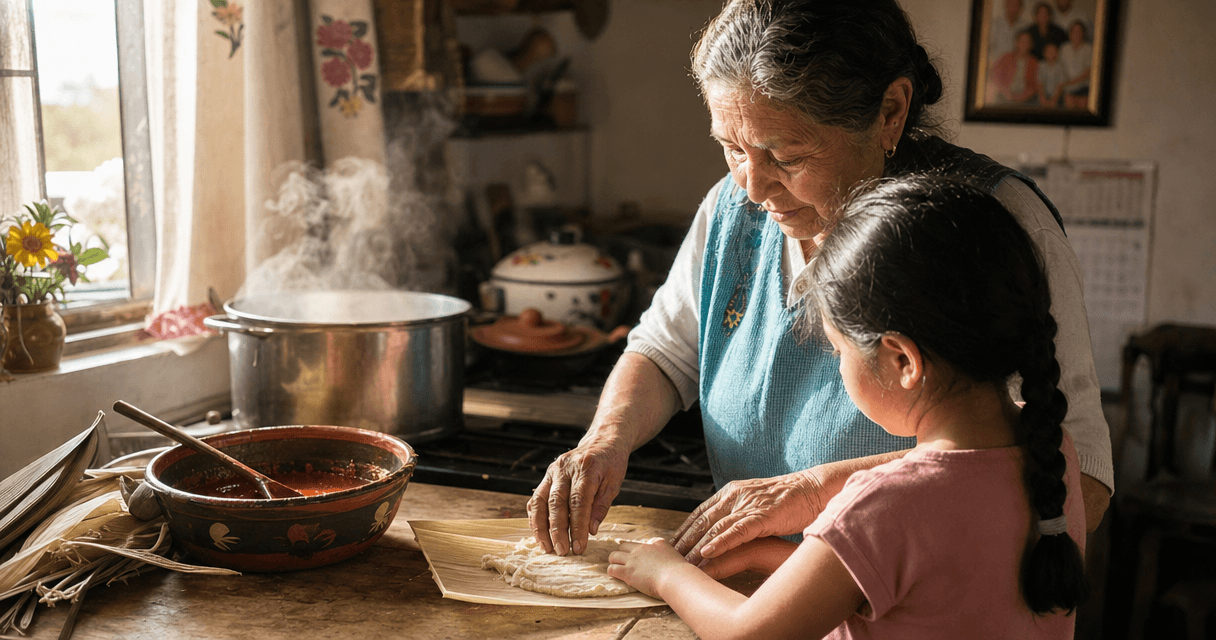
Celebrating Hispanic heritage at home gives your child more than cultural pride—it creates natural opportunities for Spanish learning that stick. When your child connects Spanish to family traditions, food, music, and stories that matter, the language becomes personal instead of academic.
Key takeaways
- Greater proficiency in a heritage language is associated with stronger ethnic identity and affiliation, making cultural celebrations powerful learning moments.
- Students gain a sense of empowerment when content resonates with their cultural heritage and tend to engage more deeply with Spanish.
- Traditional activities like cooking, music, storytelling, and holiday celebrations provide natural vocabulary and conversation practice.
- Heritage language maintenance provides tangible benefits in academic achievement and intangibly enhances self-esteem and cultural identity.
- Daily cultural practices at home—not just special occasions—build the strongest language connections.
Why cultural connection accelerates Spanish learning
Your child's brain learns Spanish differently when it carries emotional meaning. Culture is very much a part of language since the context of communication carries a cultural overtone. When your daughter learns the word tamales while helping abuela in the kitchen, she's building a memory anchor that a flashcard can never create.
Children of parents with a strongly positive perception of transgenerational transmission had better expressive skills in their heritage language. That means when you celebrate your family's traditions with pride, your child absorbs Spanish more naturally.
The identity-language connection
Language serves as a bridge for creating a sense of belonging to an ethnic group in children. When your child sees Spanish as part of who they are—not just something they study—motivation shifts. They practice because they want to connect, not because they have to.
One study found that Spanish-English heritage bilingual children reported feeling pride for being able to speak Spanish, showed appreciation for cultural diversity, and enjoyed communicating with family in their heritage language. That pride becomes fuel for continued learning.
Everyday traditions that build Spanish skills
You don't need to wait for Hispanic Heritage Month or a special occasion. The most effective cultural practices happen in daily family life.
Sunday family meals
Many Hispanic families gather weekly for domingo familiar—Sunday family time centered around a shared meal. This tradition naturally introduces food vocabulary, family relationship terms, and conversational Spanish in a relaxed setting. Your child hears Spanish used for real communication, not just instruction.
Even if your extended family isn't nearby, you can create your own version: a weekly meal where Spanish is the language of the table, where your child helps prepare a traditional dish and learns the names of ingredients and cooking actions.
Music and storytelling
Traditional songs carry language in a way that makes it memorable. Whether it's Las Mañanitas for birthdays, holiday villancicos, or regional folk songs from your family's country of origin, music teaches pronunciation, rhythm, and cultural context simultaneously.
Storytelling works the same way. Share family stories—how abuela came to this country, what your childhood neighborhood was like, funny memories from your own childhood. These stories give your child vocabulary in context and a reason to ask questions in Spanish.
Cooking together
The kitchen is one of the best Spanish classrooms. When your child helps make arroz con pollo, empanadas, or flan, they're learning action verbs (cortar, mezclar, hornear), ingredient names, measurements, and following directions—all in Spanish. Plus, the sensory experience makes the vocabulary stick.
Hispanic family traditions centered around cooking create powerful bonds that transcend generations, as grandmothers pass down recipes through touch and taste rather than written instructions.
Celebrations that deepen language and identity
Special occasions offer concentrated cultural learning. Here's how to make them work for Spanish development.
Holidays rooted in your family's heritage
Whether it's Día de los Muertos, Las Posadas, Nochebuena, or regional celebrations specific to your family's country, holidays provide rich vocabulary and cultural context. Your child learns the language of celebration: ofrenda, veladora, estrella, ponche.
These aren't just vocabulary words. They're connected to memory, emotion, and family identity. That makes them unforgettable.
Birthday traditions
Traditional birthday customs—singing Las Mañanitas, breaking a piñata, sharing pan dulce—give your child repeated exposure to the same Spanish phrases and vocabulary every year. Repetition in a joyful context is one of the most effective ways to build fluency.
Celebrating with a piñata at kids' birthday parties is a tradition children are eager to embrace, and it's something meaningful in the makeup of who they are—Hispanic, and proud of it.
Family gatherings with extended relatives
When your child spends time with Spanish-speaking grandparents, aunts, uncles, and cousins, they hear natural conversation and regional expressions they won't get anywhere else. These interactions show your child that Spanish is a living language people use to connect, laugh, and belong.
If your extended family isn't nearby, video calls work too. A weekly call with abuela where your child shares their week in Spanish builds both language skills and family bonds.
Making heritage language part of daily life
The families who succeed at heritage language maintenance don't rely on big cultural events alone. They weave Spanish into everyday routines.
Hispanic family traditions rely heavily on preserving Spanish through daily interactions, and many households establish language rules—such as Spanish-only days or requiring children to speak Spanish when addressing grandparents—to maintain linguistic connections.
Here's what that can look like:
- Mornings start with buenos días and a quick conversation in Spanish about the day ahead.
- Bedtime includes a Spanish story or prayer.
- One parent speaks only Spanish at home, even if the other speaks English.
- Family movie nights feature films in Spanish—Coco, Encanto, or classic movies from your family's country.
- You play traditional games like lotería where calling out the cards builds vocabulary naturally.
These small, consistent practices add up. They show your child that Spanish isn't something you do in class—it's something you live.
When cultural pride fuels language growth
Your child's relationship with Spanish depends on how they feel about being Hispanic. When they see their heritage as something valuable, beautiful, and worth preserving, they want to speak the language.
Kids' self-esteem and connection to community get a boost when they see themselves and their families represented in stories. Surround your child with books, music, and media that celebrate Hispanic culture. Let them see people who look like them, speak like them, and share their heritage thriving and proud.
Talk openly about what your family's culture means to you. Share why you want your child to speak Spanish, what it meant when you first heard them use a phrase your grandmother used to say, how it feels when they can talk to their cousins in their language.
That emotional connection—knowing Spanish is part of their identity and their family's story—is what transforms occasional practice into genuine fluency.
What this looks like in real life
You don't have to be perfect. You don't have to cook elaborate traditional meals every week or host big family gatherings monthly. Start small:
- This Sunday, make one traditional dish together and talk through the recipe in Spanish.
- This week, play one song from your childhood and teach your child the lyrics.
- This month, share one family story in Spanish—even if you have to pause and translate parts.
- This year, choose one holiday or tradition to celebrate fully, with all the Spanish vocabulary and cultural context that comes with it.
Every small cultural moment you create is a Spanish learning opportunity. Every tradition you pass down is a reason for your child to keep speaking.
Your family's heritage is one of the most powerful tools you have for helping your child become a confident Spanish speaker. When Spanish is connected to identity, belonging, and family love, it becomes something your child wants to protect and grow.
If you want to strengthen your child's Spanish skills in a way that honors your family's heritage, Spanish For Us pairs your child with a dedicated native-speaking teacher who understands the importance of cultural connection. Book a free class and see how the right teacher can help your child embrace both the language and the identity that comes with it.
Sources
- Frontiers | Predictors of language proficiency and cultural identification in heritage bilinguals — Frontiers in Communication, 2022
- Frontiers | Affirming culture and cultural identity in the bilingual/ESL classrooms — Frontiers in Education, 2024
- How migrants' transcultural perceptions shape their children's bilingual language development — NCBI, 2024
- Hispanic Traditions Passed Down at Home: Culture Beyond Public Celebrations — United Tribes, 2026
- Heritage Language Maintenance: Research Review and Reflection — ECTESOL Review, 2020
- 6 Hispanic Traditions Our DFW Family Embraces — Collin County Moms, 2025
- 3 Ways to Celebrate Hispanic Heritage as a Family — Common Sense Media, 2025
Frequently Asked Questions
What if I'm not fluent in Spanish myself?
You don't need to be fluent to celebrate your heritage at home. Start with what you know—family recipes, songs your parents sang, or simple phrases you remember. Even cooking together while naming ingredients in Spanish, or playing music from your family's country, creates cultural connection. Many families successfully maintain heritage language when parents focus on cultural pride and consistency, even with limited fluency.
How often should we celebrate cultural traditions for it to help with Spanish?
Daily small moments matter more than occasional big events. A weekly Sunday meal where you speak Spanish, a bedtime story in Spanish, or a morning greeting routine builds more language than one elaborate celebration per year. Aim for at least one daily cultural touchpoint—a song, a phrase, a food tradition—so Spanish feels like part of everyday life.
My child seems embarrassed about our heritage. How do I help them feel proud?
Embarrassment often comes from feeling different or not seeing their heritage represented positively. Surround your child with media, books, and role models who celebrate Hispanic culture. Talk openly about what your heritage means to you and why it's valuable. When your child sees their culture as something powerful and beautiful—not just different—pride follows, and with it, motivation to speak Spanish.
Can cultural celebrations really replace formal Spanish lessons?
Cultural celebrations don't replace structured learning—they enhance it. Traditions provide emotional context and real-world vocabulary that make formal lessons stick. The most effective approach combines both: a dedicated teacher who provides structure and a home environment where Spanish is connected to identity, family, and joy.
What if my family's traditions are different from what my child learns in school?
Regional differences are part of what makes Hispanic culture rich. Use those differences as teaching moments. Explain that your family's way of celebrating or speaking comes from a specific country or region, and that diversity within Hispanic culture is something to celebrate. It helps your child understand that there's no single "right" way to be Hispanic or speak Spanish.
Ready to get your child speaking Spanish?
Book a free 1-on-1 class with a native-speaking teacher. No commitment, no credit card.
Try a Free Class