Child Mixing English and Spanish? What to Tell Relatives
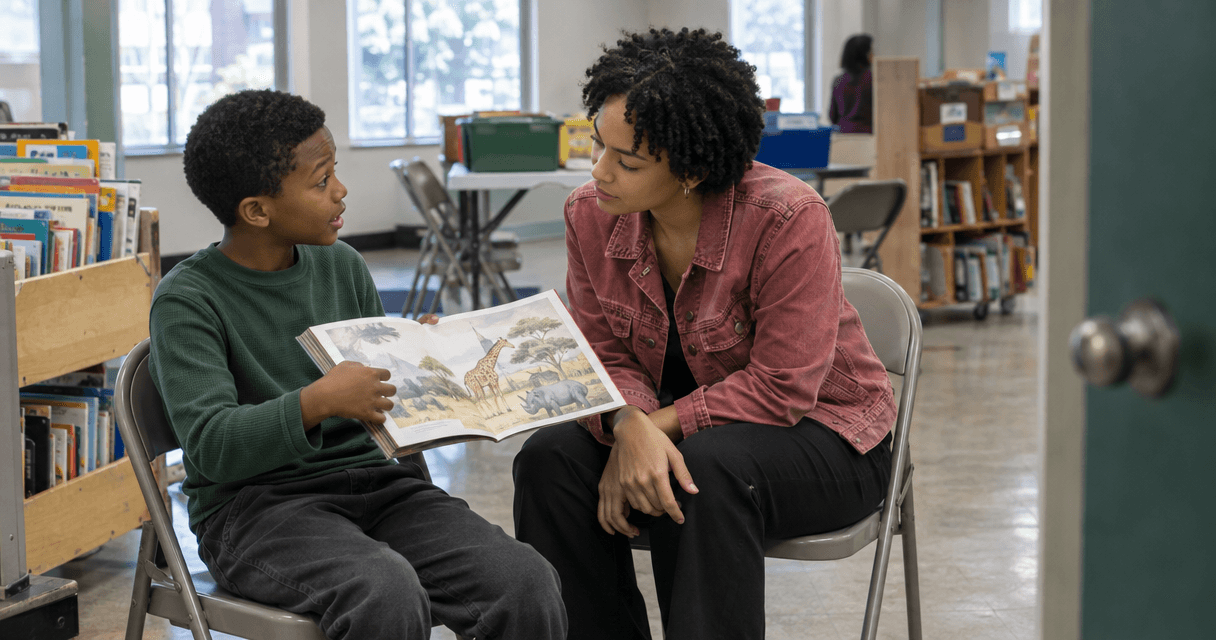
A child mixing English and Spanish is not, by itself, showing confusion; the American Academy of Pediatrics describes using words from different languages in one sentence as normal in its multilingual parenting guidance. Start by responding to your child’s meaning, then offer Spanish wording when it would help the conversation. (healthychildren.org)
Key takeaways
- Respond to your child’s message before deciding whether to offer a Spanish word.
- Look at the conversation’s context before interpreting a language switch.
- Offer missing vocabulary without requiring your child to restart the whole sentence.
- Ask relatives to keep corrections brief and let your child finish speaking.
- Bring broader communication concerns to a qualified professional rather than judging mixed sentences alone.
What does switching languages actually look like?
Code-switching means moving between languages within a sentence or across sentences. Fluent multilingual speakers do it too, according to ASHA’s explanation of code-switching. That makes “Does my child mix?” a poor stand-alone test of Spanish ability. (asha.org)
Use the contrasting examples below to think through a particular moment. They are illustrations, not tests for identifying why your child switched.
A word inside a Spanish sentence
Imagine your child saying, “Quiero el book de animales,” meaning “I want the animal book.” You could answer, “El libro de animales. Vamos a buscarlo,” meaning “The animal book. Let’s look for it.”
Your child might then ask, “¿Cómo se dice ‘shelf’?” In that moment, give the requested word and keep looking together; there is no need to ask for a complete retelling of the request.
A switch when the listener changes
Now imagine your child telling a cousin, “Look at this picture,” then turning to you and saying, “Mira este perro,” meaning “Look at this dog.” Here, the change happens between messages directed at different people.
Compare that with an explicit request for help finding a word. Treat each situation on its own terms, rather than giving both the same instruction to “pick one language.”
Should you correct every mixed sentence?
You can keep speaking Spanish without requiring your child to repeat every sentence entirely in Spanish. ASHA’s linked family resource recommends encouraging communication, valuing practice over perfection, and accepting some language mixing in its guide to learning more than one language. (asha.org)
For everyday family conversations, try offering the wording once and moving on. Save a longer explanation for when your child asks, or for a separate moment you have agreed to spend practicing together.
Offer wording when it serves a purpose
Suppose your child tells an aunt, “El perro está sleeping,” meaning “The dog is sleeping.” You could respond, “Sí, está durmiendo,” meaning “Yes, it’s sleeping,” then continue discussing the picture.
If the aunt genuinely cannot understand the English word, help make the message clear: “Durmiendo. Está durmiendo.” Invite your child to continue from there instead of starting the whole conversation over.
Keep practice separate from a family performance
If you want to revisit the word later, suggest a small activity: “Let’s each choose an animal picture and say what it’s doing.” Take a turn yourself, and offer help if your child wants it.
Avoid turning the next family visit into a check on whether that word was remembered. Your goal can remain a conversation your child is willing to join.
A calm response framework for the moment
Try this three-step approach when a mixed sentence attracts attention. Use it as a parent’s decision aid, with room to adjust to your child and the listener.
- Hear the message: Let your child finish and respond to what they meant.
- Check understanding: Notice whether the listener understood or needs a word explained.
- Offer and continue: Supply helpful Spanish wording once, then return to the conversation.
At a community-center book swap, for example, imagine your child holding up a book and saying, “Quiero este porque tiene funny animals.” You could reply, “Tiene animales graciosos. ¿Cuál te gusta?” That means, “It has funny animals. Which one do you like?”
If a relative interrupts with “Say it properly,” try: “Let’s hear which animal they chose first. We can help with a word afterward.” Then give your child the next turn.
What to say when relatives worry about confusion
Keep the explanation short enough to use without an audience gathering around your child. Drawing on the pediatric guidance above, you might say, “Mixing languages on its own doesn’t mean confusion. We’re continuing to use Spanish and helping with words as they come up.”
You do not have to settle every disagreement during the visit. If a relative wants a longer discussion, offer to share the guidance afterward.
Ask for one specific change
Choose a request that describes what you want the relative to do. For example: “Please let them finish before offering a word,” or “Please answer the story first, even if part of it is in English.”
If comments continue, set a calm boundary: “We’re happy for you to help with Spanish. Please leave comments about how well they speak for a conversation with me.”
You can also give a relative a positive role: invite them to talk about the book your child chose. Ask them to share their own favorite animal and leave space for your child’s response.
When should you seek additional guidance?
Broader communication difficulties deserve attention, even when mixing itself is ordinary. ASHA explains that language disorders can affect all the languages a child uses, while proficiency and language dominance can differ; its guidance on spoken language disorders emphasizes assessment that considers the child’s linguistic background. (asha.org)
If you are concerned about understanding or expressing ideas beyond occasional switching, speak with your child’s pediatrician or a speech-language pathologist experienced with multilingual children. Bring examples from both languages and explain where your child hears and uses each one.
Spanish For Us offers 1-on-1 online Spanish classes with a dedicated native-speaking teacher. If you would like support with your child’s Spanish, book a free class and share the family conversations you want to help your child join. (spanishforuskids.com)
Sources
- Young Children Learning Multiple Languages: Parent FAQs — American Academy of Pediatrics and ASHA, updated 2025.
- Multilingual Service Delivery in Audiology and Speech-Language Pathology — American Speech-Language-Hearing Association.
- Learning More Than One Language — Communication Health Support Association, linked by ASHA.
- Spoken Language Disorders — American Speech-Language-Hearing Association.
- Online 1-on-1 Spanish Classes for Kids — Spanish For Us.
Frequently Asked Questions
What if my child asks me to stop repeating their words in Spanish?
Respect the request during casual conversation and ask how they would prefer you to help. You might agree that you will offer a word only when they ask, then choose a separate time for Spanish practice together.
Should I ask my child’s teacher to ban English during Spanish class?
Ask the teacher how they handle a missing word and help your child return to Spanish before requesting a blanket rule. Share a concrete goal, such as helping your child describe their day to a relative, and discuss how the teacher would support that conversation.
What should I do if my child mixes languages in a written school assignment?
Check the assignment’s language requirements with the teacher. If it calls for Spanish, help your child mark English words to revisit after finishing the draft, then ask the teacher what kinds of help are appropriate.
How can I respond if my child says their Spanish is bad after a relative’s comment?
Acknowledge the comment directly: “That sounded upsetting. I wanted to hear what you were telling us.” Ask whether your child wants help finding a word or would rather continue their story, and discuss the relative’s comment privately with the adult.
Ready to get your child speaking Spanish?
Book a free 1-on-1 class with a native-speaking teacher. No commitment, no credit card.
Try a Free Class