Documenting Spanish in Your Child's Homeschool Portfolio
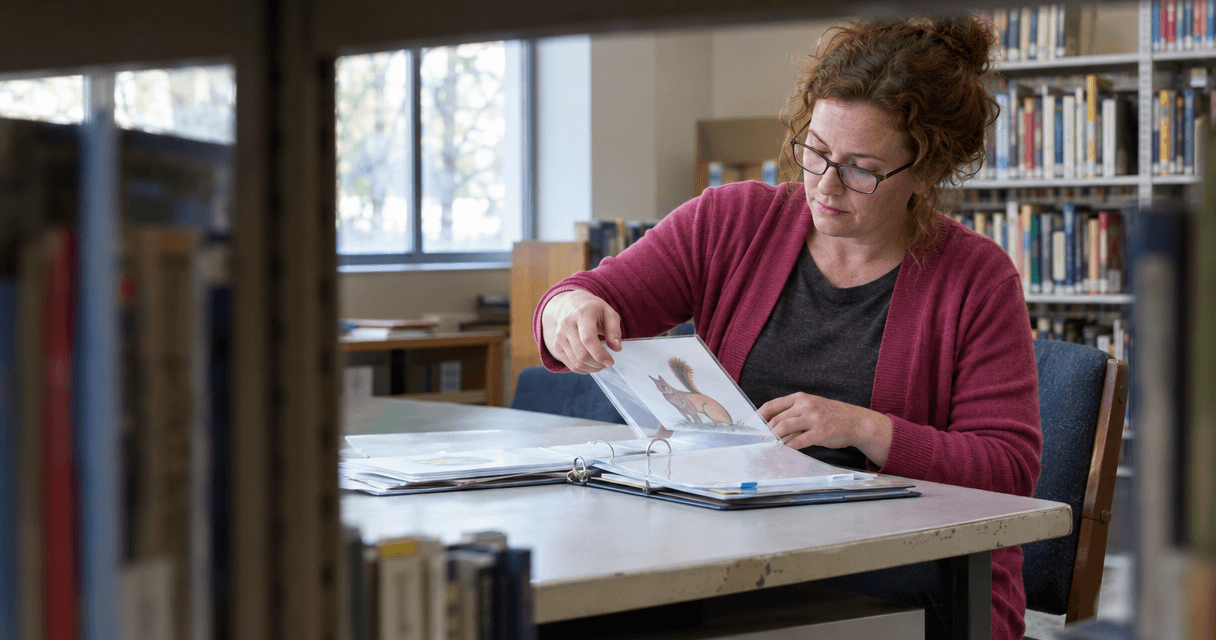
Organize your homeschool Spanish portfolio around three records: an attendance log, a brief description of instruction, and dated work samples from activities your child already does. Use the framework below as an organizational starting point, then check the requirements that apply to your family before deciding what to retain or submit.
Key takeaways
- Keep Spanish attendance, instruction descriptions, and dated samples together in one subject folder.
- Record completed activities and actual participation rather than copying your planned schedule.
- Describe what your child practiced and how much help you provided.
- Choose samples from existing activities instead of creating extra portfolio assignments.
- Verify applicable requirements before deciding on formats, submission dates, or record retention.
Check requirements before choosing your format
Start with your state education department’s official home education guidance. Identify your homeschooling arrangement, then check the linked law and any applicable district or supervising-program procedures; use this article for organization, not as a legal compliance checklist.
For example, Florida’s home education guidance calls for an activity log kept alongside instruction, reading materials identified by title, and work samples. It also specifies retaining the portfolio for two years; those details apply to that program, not automatically to your family elsewhere. See the Florida home education parent FAQ. (fldoe.org)
Pennsylvania’s guide describes a portfolio with work samples and a contemporaneous reading-material log that demonstrates required instructional days or hours. Those attendance totals concern the overall home education program, rather than a separate Spanish quota, as explained in the Pennsylvania home education guide. (pa.gov)
Make a short requirements note
At the front of your records, save the official source, the date you checked it, and answers to these questions:
- What attendance records and subject documentation apply to our arrangement?
- Are particular sample formats or evaluations required?
- What must we submit, to whom, and by when?
- How long must we retain records, and are digital copies acceptable?
When instructions are unclear, ask the responsible office for the relevant rule in writing. Pennsylvania, for example, directs families to review local district board policy for filing information and provides a state advisor contact on its home education information page. (pa.gov)
Keep one Spanish attendance log
Create a Spanish section inside your existing homeschool records. For your working log, use columns for the date, activity, instructor or provider, participation, and actual duration if required or useful to you.
Record completed instruction rather than scheduled instruction. Mark cancellations clearly, and keep a rescheduled class on the date it actually happened; keep this subject log alongside any required overall attendance record.
Copy this simple entry
Use this fictional example as a formatting model, adjusting the fields to your requirements. The activity description can share the same row as attendance:
September 15, 2026 | Spanish | Live online class | Teacher: [name] | Attended | 25 minutes. Practiced describing animals using picture prompts; sample reference: animal drawing dated September 15.
If your child also practices with you, add a separate entry for that activity. Avoid filling in estimated minutes from memory just to make the log look complete; label any reconstructed entry and its basis clearly.
Describe what instruction involved
Write a short subject overview at the beginning of your Spanish folder. Include the date range, materials or provider, general format, and the skills you intend to practice, then revise it when your plans change.
For example: “Beginning Spanish, September–December. Planned activities include live conversation practice, listening games, and shared picture-book reading, with a focus on greetings and describing familiar objects.” Label this as a plan, and use your dated entries to document what actually happened.
Keep activity notes specific
After instruction, aim for one or two plain sentences. Try: “Your child described two animal pictures after hearing a model, then chose a favorite and answered a follow-up question with help.”
Name the actual book, resource, or activity when relevant. If you do not speak Spanish, ask the teacher what your child practiced and what support was needed; label a teacher’s summary separately from your own observations.
Save dated samples from existing activities
Choose work your child has already produced during Spanish practice. Start with a drawing used for conversation, a completed matching activity, or a short piece of writing, subject to the sample requirements you verified.
For each item, add the activity date, a brief description, and a note about help. Keep your child’s original response visible, and identify anything you wrote down on their behalf.
Document speaking without adding a worksheet
For your own progress record, attach an observation to the object your child discussed. For example: “September 15: described this animal drawing after the teacher modeled a phrase; needed a prompt for the color.”
If your child is comfortable, consider a short audio sample during ordinary practice rather than recording an entire class. Treat observations and recordings as supplemental evidence unless your supervising body confirms that they satisfy its sample requirements.
Put the three pieces together
For the fictional September 15 activity, file the attendance entry, the brief instruction note, and the dated animal drawing under the same sample reference. Keep them together in a binder section or matching digital folder, according to your verified format requirements.
Later, choose another naturally occurring animal-description activity for comparison. Write down what happened that time, including any prompts, without assuming your child must demonstrate a particular amount of improvement by a deadline.
Try a brief weekly filing check, perhaps while your child browses at the library. Slip loose work into the folder, check dates against your calendar, and back up digital files; write activity notes close to instruction rather than waiting for that weekly check.
Bring your child’s current Spanish goals to Spanish For Us. You can get started by sharing what you want your child to practice and asking what information you can use in your own homeschool records.
Sources
- Home Education Parent FAQ — Florida Department of Education, 2024.
- Home Education and Private Tutoring Guide — Pennsylvania Department of Education, revised May 2026.
- Home Education and Private Tutoring Information — Pennsylvania Department of Education.
Frequently Asked Questions
Should I assign a Spanish grade for the portfolio?
Check your applicable reporting requirements before deciding whether to assign a grade. For your own planning, consider a short description of what your child can do and what still needs support. If you choose to grade, define your criteria in advance and keep them with the record.
Can I use one Spanish folder for siblings?
Use separate named sections for each child, even when they share an activity. Keep each child’s attendance, responses, and samples identifiable. You can reference the same shared resource description without duplicating every page.
What should I do if I started keeping records halfway through the year?
Begin accurate, dated records now, then gather existing work and class confirmations from earlier months. Mark reconstructed entries with the date you prepared them and the evidence you used. If you may have missed a requirement, ask the responsible office or a qualified local advisor how to address the gap.
How should I share digital samples without exposing family information?
Create a separate review folder containing only the requested materials, and check its access settings before sharing. Remove unrelated family details and avoid public links to your child’s recordings. Confirm the recipient’s preferred submission method first.
Ready to get your child speaking Spanish?
Book a free 1-on-1 class with a native-speaking teacher. No commitment, no credit card.
Try a Free Class