How to Encourage Your Child to Use Spanish in Daily Conversations
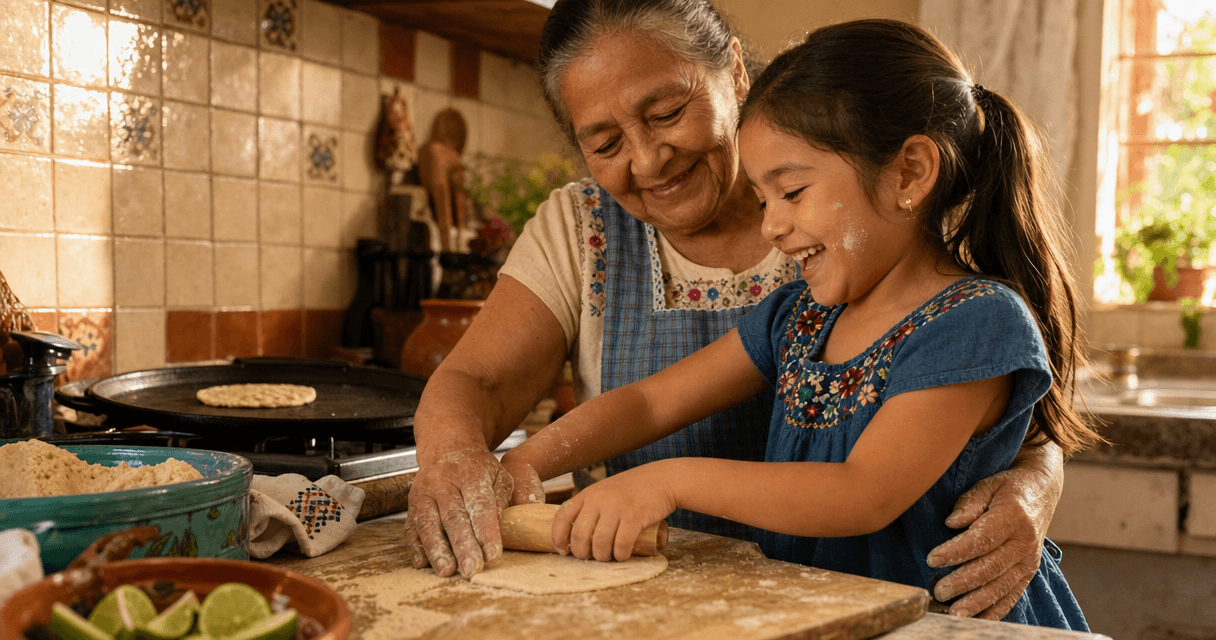
Your child will speak Spanish when it feels natural, personal, and worth the effort. The key is creating daily moments where Spanish becomes the language of connection, not pressure. With the right approach, you can help your child move from understanding Spanish to actively choosing to speak it.
Key takeaways
- Children need consistent exposure and genuine reasons to speak Spanish, not just passive listening.
- Research shows language is better preserved when parents actively get involved in its development and instruction.
- Code-switching between English and Spanish is normal and can actually support bilingual language development, not hinder it.
- Creating Spanish-only moments during daily routines builds speaking confidence without overwhelming your child.
- Celebrating small wins and avoiding overcorrection keeps Spanish feeling positive and achievable.
Why children resist speaking Spanish (even when they understand it)
You ask a question in Spanish. Your child answers in English. You know they understood every word, but they chose the easier path.
This is one of the most common frustrations for families trying to maintain Spanish at home. Your child's comprehension is growing, but their willingness to speak lags behind.
The reason is simple: speaking requires more effort than understanding. When children know you'll understand their English, they take the path of least resistance. Heritage language maintenance is necessary for effective communication at home and family cohesiveness, but children need both exposure and genuine need to make speaking worth the effort.
The community language surrounds them at school, with friends, in media. Spanish becomes the language they hear but don't need to use.
Create daily Spanish moments that feel natural
The most effective strategy is not forcing Spanish all day. It's creating predictable moments where Spanish is the only option and the interaction feels worth having.
Assign Spanish to specific routines
Pick one or two daily activities that happen only in Spanish. Bath time. Bedtime stories. Cooking dinner. The morning drive to school.
Research shows bilingual children benefit most when language is used in social, interactive contexts rather than through solitary screen time. The goal is active participation, not passive listening.
When your child knows that dinner prep is always in Spanish, they stop negotiating. It becomes part of the routine, like washing hands before eating.
Narrate what you're doing together
As you move through these Spanish moments, describe what's happening. "Voy a cortar las zanahorias. ¿Me pasas el cuchillo?" Your child hears the words in context and sees the actions they describe.
This natural labeling builds vocabulary without feeling like a lesson. Your child learns that Spanish is the language of doing things together, not just the language of correction.
Make Spanish the language of connection with specific people
If grandparents, aunts, uncles, or cousins speak Spanish, make video calls a weekly routine. When your child knows that talking to abuela means speaking Spanish, they have a real reason to try.
Parents promote children's heritage language maintenance in order to facilitate communication among family members and consolidate family relationships. The shift or loss of heritage language presents an obstacle to communication between family members, especially between children and their grandparents.
Your child's relationship with Spanish-speaking relatives is one of the most powerful motivators you have. Protect that connection.
Stop correcting every mistake
When your child finally says something in Spanish, your instinct might be to fix their grammar or pronunciation. Resist it.
To encourage children to speak the minority language, positive affirmations are necessary. Frequent interruptions and corrections may discourage your child from attempting to speak.
If your child says "Yo quiero agua," don't immediately jump in with "Se dice 'quiero agua,' no necesitas decir 'yo.'" Just respond naturally: "¿Quieres agua fría o del tiempo?" You've modeled the correct form without making them feel wrong.
This is called recasting. You repeat what they said in the correct form, embedded in your response. They hear the right version without feeling corrected.
Language learning is important, but your relationship with your child is essential. Make Spanish feel encouraging, not like a test they keep failing.
Increase Spanish input strategically
Your child will speak more Spanish when they hear more Spanish. But not all input is equal.
Prioritize interactive Spanish over passive media
Spanish cartoons and music provide exposure, but they don't require your child to respond. Passive listening builds comprehension. Active conversation builds speaking.
Use media as a starting point, not the whole strategy. Watch a show together, then talk about it in Spanish. Listen to a song, then sing it together while making breakfast.
The difference is participation. Your child's brain practices retrieval and production, not just recognition.
Recruit other Spanish speakers
If you're the only Spanish speaker at home, the pressure is all on you. Look for Spanish-speaking playdates, community events, or classes where your child hears and uses Spanish with other children.
Children's bilingualism develops through dynamic, interactive experiences across multiple contexts, not just exposure at home. While parental involvement is critical, it must be supported by external experiences that legitimize and reinforce heritage language use.
When your child sees other kids speaking Spanish, it stops feeling like "mom's thing" and starts feeling normal.
Don't fear code-switching
Your child mixes English and Spanish in the same sentence. You worry this means they're confused or not learning either language properly.
Relax. Code-switching is a normal part of bilingual communication and should be understood as neither discouraged nor encouraged. Recent research frames code-switching as a communicative strength that helps young bilinguals navigate their dual-language environments.
When your child says "Mami, I want más leche," they're using both languages to express exactly what they mean. They're not confused. They're being efficient.
Code-switching often happens when children are filling a vocabulary gap or when one language has the perfect word for what they want to say. It's a sign of linguistic flexibility, not failure.
Don't punish it. Just keep speaking Spanish back to them. Over time, as their Spanish vocabulary grows, the gaps will fill in naturally.
Celebrate small wins
Your child used a new Spanish phrase at dinner. They answered abuela's question without switching to English. They sang along to a Spanish song in the car.
Notice it. Celebrate it. "¡Qué bien dijiste eso! Me encanta cuando hablas español conmigo."
Positive reinforcement builds confidence. Your child starts to associate Spanish with pride, connection, and your approval.
The goal is not perfection. The goal is participation. Every sentence your child speaks in Spanish is progress.
When to get outside help
Sometimes, even with consistent effort at home, children need an external reason to take Spanish seriously. A teacher who makes Spanish feel fun and personal can change how your child sees the language.
When Spanish becomes something your child does with someone they enjoy, not just something you ask them to do, resistance drops. A weekly class with the right teacher gives your child a dedicated Spanish relationship outside the family.
That's where Spanish For Us helps. Our native-speaking teachers build real connections with kids, making Spanish feel like something they want to speak, not something they have to. One 25-minute class a week can be the external support that makes your home efforts finally click.
Sources
- Perspectives about home-language maintenance in multilingual families with and without language and communication disorders: A scoping review — ScienceDirect, 2024
- Patterns of Mother, Father, and Child Code-Switching and Links With Child Language Development — PubMed, 2026
- Heritage Language Maintenance: Research Review — McGill eScholarship, 2020
- 10 Fun Bilingual Family Activities to Practice Spanish Together — Amidon Studios, 2026
- How to Get Your Child to Speak the Minority Language — Chalk Academy, 2023
- Beyond the home: rethinking heritage language maintenance as a collective responsibility — Frontiers in Psychology, 2025
- Bilingual Language Development in Infancy: What Can We Do to Support Bilingual Families? — PMC, 2022
Frequently Asked Questions
What if my child only answers me in English?
Keep responding in Spanish without showing frustration. Your child understands you, which means the foundation is there. Try offering choices in Spanish ("¿Quieres manzana o plátano?") which require only a one-word answer. Celebrate any Spanish word they use, even if the rest of the sentence is English. Consistency and patience will gradually shift their comfort level with speaking.
How much Spanish exposure does my child actually need?
Quality matters more than quantity. Aim for at least 30% of your child's waking hours in Spanish for them to develop strong speaking skills, but make those hours interactive and meaningful. Two hours of conversation, play, and shared activities in Spanish will do more than four hours of background TV. Focus on creating rich, engaging Spanish moments rather than just counting minutes.
Should I enforce a Spanish-only rule at home?
A strict Spanish-only policy can backfire if it creates tension or makes your child shut down. Instead, designate specific Spanish times or activities rather than policing every conversation. When Spanish feels like a natural part of certain moments rather than a rigid rule, children are more likely to participate willingly and build positive associations with the language.
What if I'm not fluent in Spanish myself?
You don't need perfect Spanish to support your child's learning. Speak what you know, even if it's basic phrases during meals or bedtime. Your child benefits from hearing you try. For more advanced instruction, connect them with fluent family members through video calls or consider a teacher who can provide the native-speaker model and conversational practice you can't offer at home.
How do I handle my child's frustration when they can't find the Spanish word?
Stay calm and supportive. If they're stuck, give them the word they need without making it feel like a failure. Say "La palabra es 'cuchara'" and move on with the conversation. The goal is to keep communication flowing, not to turn every gap into a teaching moment. When Spanish feels helpful rather than hard, your child will keep trying.
Ready to get your child speaking Spanish?
Book a free 1-on-1 class with a native-speaking teacher. No commitment, no credit card.
Try a Free Class