How Can Parents Make Spanish Learning Fun for Kids?
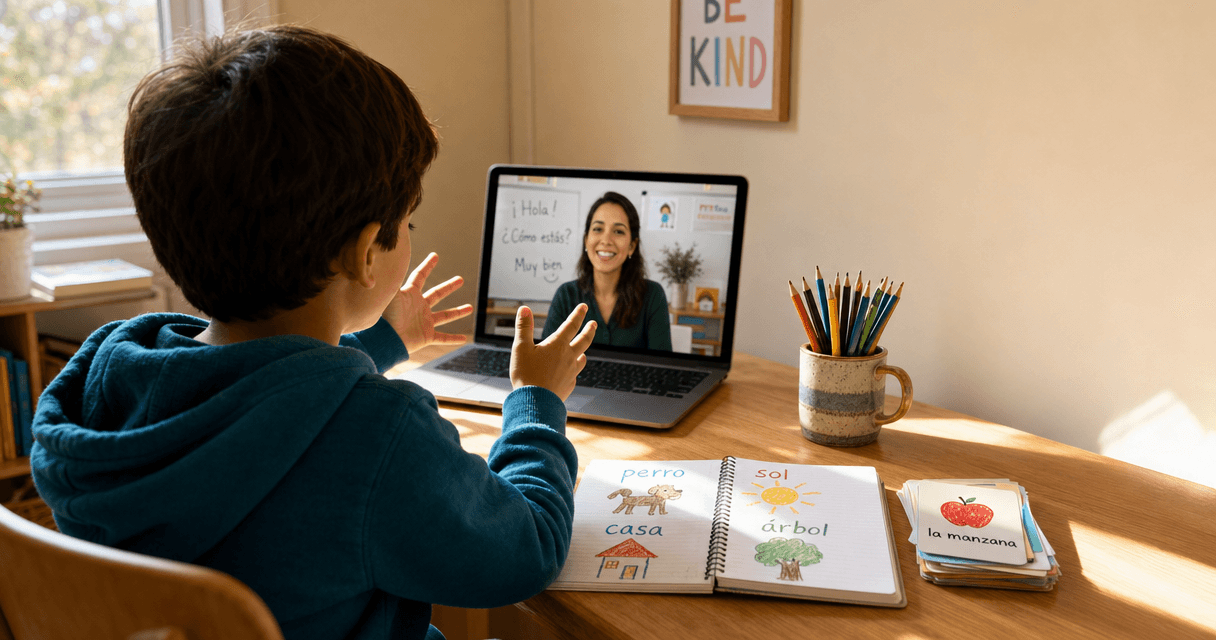
Fun Spanish learning happens when your child sees language as play, not work. Research from the University of Oxford shows that children in play-based language programs made nearly 1.5 times more progress than peers in traditional instruction, gaining 7–8 months of growth in just 20 weeks. The right approach transforms Spanish from a subject to study into something your child genuinely looks forward to.
Key takeaways
- Play-based learning accelerates language development more effectively than traditional instruction alone.
- Games, songs, and movement help children retain vocabulary through rhythm, repetition, and physical engagement.
- Consistency matters more than intensity — short daily sessions outperform long weekly lessons.
- Game-based learning produces moderate to large effects on cognitive, social, emotional, and engagement outcomes in early childhood.
- The teacher-child connection determines whether your child stays motivated or shuts down.
Why fun matters in language learning
Your child's brain is wired to learn through play. When Spanish feels like a game, their attention stays locked. When it feels like homework, resistance builds.
A 2024 systematic review on game-based learning found that educational games promote critical thinking, problem-solving, collaboration, and creativity in young children. The study confirmed that game-based approaches produce moderate to large positive effects on learning outcomes.
The difference is not just engagement. Fun Spanish learning creates positive associations with the language. A child who enjoys their Spanish class today is far more likely to stay motivated through the years it takes to become fluent.
Turn everyday moments into Spanish practice
You do not need a formal curriculum to start. Weaving Spanish into daily routines makes the language feel natural rather than forced.
Label your home
Place Spanish labels on common objects — door, window, refrigerator, table. Your child sees the words dozens of times per day. Visual cues paired with repeated exposure help vocabulary stick without drilling.
Use Spanish during meals
Practice food vocabulary at the dinner table. Ask your child to name what is on their plate. Count bites in Spanish. Say "más, por favor" when they want seconds. These small moments add up.
Create a Spanish routine
Pick one part of your day to use only Spanish. Morning greetings work well. So does bedtime. Consistency beats intensity. Fifteen minutes daily outperforms an hour once a week.
Games that make Spanish stick
Games create low-pressure opportunities for your child to practice without realizing they are learning.
Simon Says (Simón Dice)
This classic game teaches body parts, actions, and commands. Your child listens, processes Spanish instructions, and responds physically. The movement reinforces memory.
Scavenger hunts
Hide objects around the house and give clues in Spanish. Your child practices listening comprehension while running around. The physical activity keeps energy high and boredom low.
Memory matching
Use picture cards with Spanish words. Flip two cards at a time and find matches. This game builds vocabulary and visual memory simultaneously.
Bingo
Create bingo cards with Spanish words or images. Call out words and let your child mark their card. The anticipation of winning keeps them engaged.
These activities do not require expensive materials or elaborate prep. They just need repetition and enthusiasm.
Music and movement unlock memory
Songs help children remember vocabulary, pronunciation, and phrases through rhythm and repetition. Pairing music with physical movement engages multiple senses, which strengthens retention.
Find simple Spanish songs with gestures. "Cabeza, Hombros, Rodillas y Pies" teaches body parts. "Los Pollitos Dicen" introduces animal sounds and storytelling. Your child can sing, dance, clap, or use instruments.
Music also introduces natural pronunciation. Children mimic the melody and rhythm, which helps them internalize how Spanish sounds without formal phonics instruction.
Keep songs short and repetitive. Young children thrive on predictability. Once they know a song by heart, they will sing it unprompted — which means they are practicing Spanish without being asked.
Choose interactive tools wisely
Apps and videos can support Spanish learning, but they work best when paired with human interaction.
What to look for in apps
Choose apps with clear visuals, slow pacing, and interactive elements. Programs like Endless Spanish or Gus on the Go offer age-appropriate lessons. Research shows that game-based literacy apps help children gain language skills across diverse backgrounds, with moderate usage times of about 30 minutes per week showing particular benefit.
Sit with your child while they use the app. Repeat words together. Discuss what you see. This transforms passive screen time into active learning.
Use Spanish-language shows
Cartoons expose children to colloquial expressions, vocabulary, and pronunciation in a visually engaging format. Shows like "Pocoyó" or "Sesame Street en Español" use music and storytelling to teach.
After watching, ask your child to discuss the storyline in Spanish. Even a few sentences turn passive viewing into active practice.
Balance digital and hands-on learning
Technology should supplement, not replace, real conversation. Apps teach vocabulary. A real person teaches your child how to use that vocabulary in context.
Keep sessions short and celebrate progress
Young children have short attention spans. A 15-minute session where your child stays engaged beats a 45-minute session where they zone out.
End each activity on a positive note. Celebrate small wins — saying a new word without prompting, remembering a phrase from last week, using Spanish at the dinner table unprompted.
Use sticker charts, high fives, or verbal praise. These moments keep motivation high and make Spanish feel rewarding rather than obligatory.
Consistency matters more than perfection. Your child will mix languages, make grammar mistakes, and mispronounce words. That is how language acquisition works. Correct gently by modeling the right way. Do not criticize.
Why the teacher matters most
All the games, songs, and apps in the world cannot replace a real teacher who knows how to connect with your child.
A great teacher makes Spanish feel personal. They remember what your child likes. They adjust the pace when something is too hard. They celebrate effort, not just accuracy.
That connection is what keeps your child coming back. Apps gamify vocabulary. Teachers help your child want to speak.
When your child has a teacher they trust, Spanish stops feeling like pressure. It becomes something they look forward to.
That is the difference between a child who completes a few lessons and a child who becomes fluent.
If you are ready to give your child a Spanish experience built around fun, connection, and real progress, Spanish For Us matches your child with a dedicated native-speaking teacher who makes every class something they will actually enjoy.
Sources
- The Power of Play: How Play-Based Pedagogy Enhances Children's Language Development — HEI Schools, 2025
- Game-based learning in early childhood education: a systematic review and meta-analysis — Frontiers in Psychology, 2024
- The effectiveness of game-based literacy app learning in preschool children from diverse backgrounds — Learning and Instruction, 2024
- How to Support Spanish Immersion at Home: 10 Easy Activities for Preschoolers — Inic Preschool, 2026
Frequently Asked Questions
How much time should my child spend on Spanish each day?
Fifteen to twenty minutes daily is more effective than longer, less frequent sessions. Consistency matters more than duration. Short daily practice helps your child retain vocabulary and build confidence without overwhelming them. If your child is engaged and asking for more, you can extend the session, but stop before they lose interest.
What if my child resists speaking Spanish out loud?
Resistance is normal, especially at first. Focus on listening and comprehension before pushing speech. Let your child respond in English while you continue speaking Spanish. Over time, as they feel more comfortable, they will start using Spanish words naturally. Pressure often backfires — patience and encouragement work better.
Can games really teach Spanish, or are they just entertainment?
Games are effective learning tools when designed well. Research shows that game-based learning produces measurable gains in vocabulary, comprehension, and engagement. The key is choosing games that require your child to listen, respond, and use Spanish actively — not just passively watch or click through screens.
Do I need to speak Spanish myself to help my child learn?
No. Many successful Spanish learners come from English-only homes. You can support your child by playing Spanish songs, using apps together, and celebrating their progress. For real conversation practice, your child benefits most from a native-speaking teacher who can model natural pronunciation and usage.
How long before my child starts speaking Spanish confidently?
Every child is different, but most begin using simple words and phrases within a few weeks of consistent practice. Confidence builds over months as vocabulary grows and your child hears themselves succeed. The timeline depends on frequency of practice, quality of instruction, and whether your child feels safe making mistakes.
Ready to get your child speaking Spanish?
Book a free 1-on-1 class with a native-speaking teacher. No commitment, no credit card.
Try a Free Class