How to Keep Your Child Engaged in Spanish Learning Long-Term
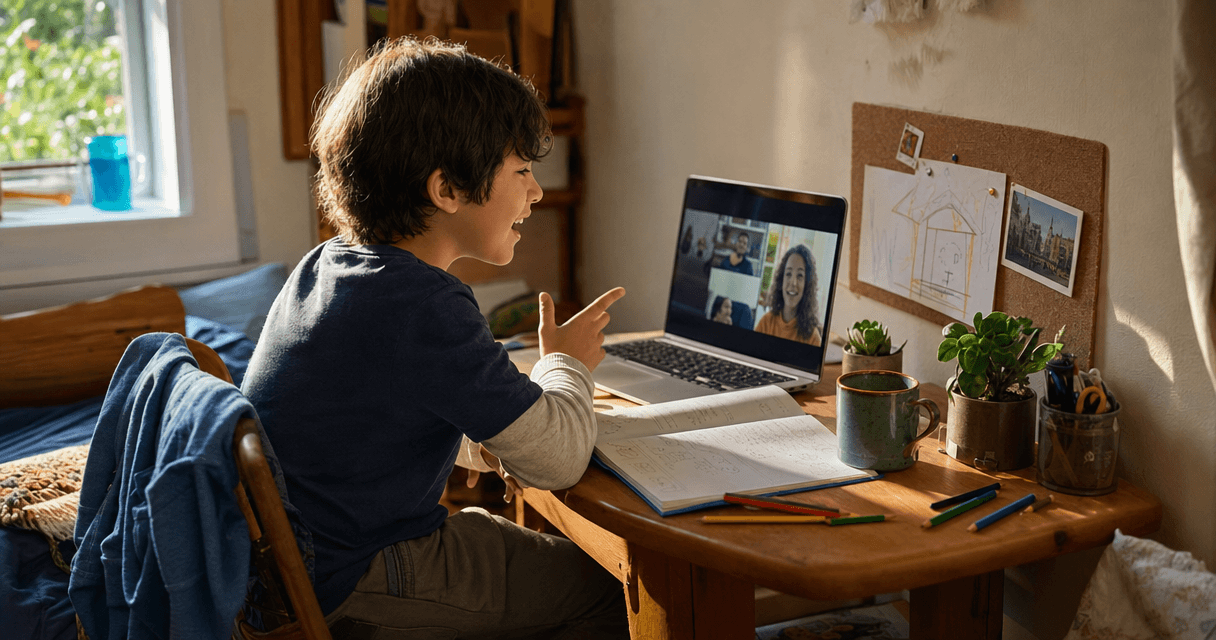
Keeping your child engaged in Spanish learning long-term requires building intrinsic motivation, celebrating small milestones, and creating meaningful connections to the language. The key is shifting from external rewards to helping your child discover genuine enjoyment in speaking Spanish — turning weekly classes into something they look forward to rather than endure.
Key takeaways
- Supporting autonomy, competence, and relatedness sustains motivation better than external rewards alone.
- Intrinsic motivation — learning for the joy of it — predicts long-term success more reliably than grades or prizes.
- Consistent exposure through daily routines makes Spanish feel natural, not forced.
- Celebrating progress milestones keeps children engaged through the inevitable plateaus.
- A dedicated teacher relationship provides the social connection that apps and group classes cannot.
Why long-term engagement matters more than early enthusiasm
Your child's first few Spanish classes might spark excitement. New vocabulary, a friendly teacher, colorful activities — it all feels fresh. But fluency is not a sprint. Research on sustained motivation shows that maintaining consistent progress over months and years requires a different kind of fuel than the novelty that powers those first weeks.
The challenge is that language learning is inherently long-term. Unlike learning to ride a bike — where success arrives in a single triumphant moment — Spanish fluency unfolds gradually. Your child will hit plateaus where progress feels invisible. They will encounter words that refuse to stick. They will have weeks where speaking feels harder, not easier.
This is where engagement becomes everything. A child who loves their Spanish class will push through the plateau. A child who dreads it will ask to quit.
Build intrinsic motivation from the start
Intrinsic motivation — the internal drive to learn for the joy of learning itself — is the single strongest predictor of long-term language success. Children who are intrinsically motivated do not need sticker charts or threats. They practice Spanish because it feels good.
How do you build that?
Let your child have a voice
Autonomy matters. When children feel they have some control over their learning, engagement skyrockets. Let your child choose between two Spanish songs to learn. Ask which game they want to play during practice time at home. Give them ownership.
This does not mean letting them quit when it gets hard. It means involving them in small decisions so Spanish feels like something they are doing, not something being done to them.
Celebrate competence, not perfection
Your child needs to feel capable. Supporting the need for competence reduces anxiety and builds confidence. Notice when your child uses a new verb correctly at dinner. Point out when they remember a word they struggled with last week. Make progress visible.
Perfection is the enemy here. If your child feels they must be flawless to earn praise, they will stop trying. Mistakes are proof they are learning.
Foster real connection
Relatedness — the feeling of being known and valued — is the third pillar of sustained motivation. This is why a dedicated teacher matters so much. Your child is not just learning Spanish. They are building a relationship with someone who knows their name, remembers what they talked about last week, and genuinely cares whether they succeed.
Apps cannot provide that. Group classes rarely do. A 1-on-1 teacher who sees your child every week can.
Create consistent, meaningful exposure at home
Maintaining consistent exposure to Spanish is crucial for long-term retention. One class per week is a strong foundation, but your child needs to hear and use Spanish between lessons to keep it alive.
You do not need to be fluent yourself to make this happen.
- Play Spanish music during breakfast or car rides. Repetition builds familiarity.
- Watch age-appropriate Spanish shows together. Even 15 minutes counts.
- Label common household items in Spanish. Your child will see the words dozens of times a week.
- Ask your child to teach you what they learned in class. Teaching reinforces learning.
The goal is not immersion. The goal is making Spanish a normal part of daily life rather than something that only exists during class.
Set short-term milestones within the long-term goal
Fluency feels impossibly far away to a seven-year-old. But ordering food in Spanish at a restaurant next month? That is concrete. Research on Directed Motivational Currents shows that breaking long-term goals into short-term milestones sustains engagement far better than vague distant promises.
Work with your child's teacher to identify achievable milestones:
- Having a five-sentence conversation with abuela
- Reading a simple Spanish book aloud
- Watching a favorite show in Spanish without subtitles
- Writing a short letter to a pen pal
Celebrate each milestone. Take a photo. Send a text to grandparents. Make it feel like an achievement, because it is.
Expect ups and downs — and normalize them
Your child will not be equally motivated every single week. Some days they will bound into class. Other days they will drag their feet. This is normal.
The path to bilingualism is gradual, filled with ups and downs. When motivation dips, resist the urge to lecture or bribe. Instead, get curious. Is your child tired? Frustrated by something specific? Bored with the current material?
Sometimes the fix is simple. A teacher can adjust the lesson plan. You can shift practice time to a different part of the day. Your child might need a week off to recharge.
The key is staying consistent through the dip rather than letting one hard week become a reason to quit.
Choose a teacher your child genuinely likes
This cannot be overstated. The teacher-student relationship is the engine of long-term engagement. A child who loves their teacher will show up even on days when Spanish feels hard. A child who feels disconnected will find every excuse to skip.
Look for a teacher who:
- Remembers details about your child's life and asks follow-up questions
- Celebrates effort and progress, not just correct answers
- Makes class feel like play, not work
- Adjusts their teaching style to match your child's personality
If the fit is not right, change teachers. This is not failure. This is finding the person who will keep your child engaged for the next three years.
At Spanish For Us, we match your child with a native-speaking teacher based on their age, level, and learning style — and if the fit is not perfect, we will rematch at no cost. The relationship matters that much.
When extrinsic rewards help (and when they backfire)
Sticker charts and prizes can jumpstart engagement, especially in the early weeks. But intrinsic motivation is a stronger predictor of long-term success than external rewards.
Use extrinsic rewards strategically:
- To celebrate a specific milestone (finishing Level 1, having a full conversation with a relative)
- To acknowledge effort during a particularly hard stretch
- As a short-term bridge when motivation is low
Avoid using them as the only reason your child shows up. If your child is only learning Spanish to earn screen time, engagement will collapse the moment the reward stops feeling worth it.
Make cultural connection part of the journey
Integrating cultural traditions into language learning enriches the experience and makes it more meaningful. Spanish is not just vocabulary words. It is music, food, stories, and traditions that connect your child to millions of people.
Celebrate Día de los Muertos. Cook a meal from a Spanish-speaking country together. Watch a Spanish-language movie and talk about it afterward. Let your child see that Spanish opens doors to experiences, not just test scores.
This is especially powerful for children without a family connection to Spanish. Cultural exploration gives them a reason to care beyond the abstract benefits of bilingualism.
Trust the process — fluency takes years, not months
You will not see transformation overnight. Some weeks your child will use a new phrase at home and you will feel like a parenting genius. Other weeks you will wonder if anything is sticking.
Both are normal. Language acquisition is not linear. Your child's brain is doing invisible work even during the plateaus — building neural pathways, consolidating vocabulary, making connections between words and meanings.
Your job is not to force faster progress. Your job is to keep Spanish present, positive, and consistent until the day your child realizes they are actually speaking it.
That day will come. And when it does, every week of showing up will have been worth it.
If you are ready to give your child the kind of Spanish class they will actually look forward to — with a dedicated teacher who knows them by name — book a free trial class with Spanish For Us. No credit card required. Just 30 minutes to see if it is the right fit.
Sources
- Comparing intrinsic and extrinsic motivation in bilingual children and their monolingual peers — Frontiers in Education, 2026
- Accounting for long-term motivation and sustained motivated learning — ScienceDirect, 2022
- Language Learning Motivation in Diverse Educational Contexts — Springer, 2024
- Embracing Bilingualism: Practical Strategies and the Enduring Value of Raising Multilingual — World Bilingual Family Network
Frequently Asked Questions
What if my child was excited at first but now resists Spanish class?
Motivation dips are completely normal and do not mean your child has lost interest permanently. Often the issue is specific — they are tired, frustrated by a particular concept, or bored with the current material. Talk to their teacher about adjusting the lesson plan or try shifting practice time to a different part of the day. Staying consistent through the dip, rather than letting one hard week become a reason to quit, is what keeps long-term progress on track.
How much Spanish exposure does my child need outside of class?
Consistency matters more than quantity. Even 15-20 minutes of Spanish exposure daily — through music during breakfast, a short show, or practicing a few phrases together — keeps the language active between lessons. You do not need immersion or fluency yourself. The goal is making Spanish a normal part of daily life so it does not feel like something that only exists during class.
Should I use rewards like screen time to motivate my child?
Rewards can help celebrate specific milestones or acknowledge effort during a tough stretch, but they should not be the only reason your child shows up. Intrinsic motivation — learning because it feels good — predicts long-term success far better than external prizes. Use rewards strategically and sparingly, and focus more on helping your child discover genuine enjoyment in speaking Spanish.
How long does it actually take for a child to become fluent?
Fluency is not a finish line you cross in a set number of months — it unfolds gradually over years. Most children need consistent practice (at least one class per week plus regular exposure at home) for 2-4 years to reach conversational fluency. Progress is rarely linear; you will see leaps forward and frustrating plateaus. Trust that your child's brain is doing invisible work even during the slow weeks.
What if we do not have a cultural connection to Spanish?
You do not need family roots to raise a bilingual child. Many successful Spanish learners come from English-only households. Focus on making the language feel relevant by exploring Spanish-speaking cultures together — cook a meal from a Latin American country, celebrate cultural holidays, watch Spanish-language films. Cultural connection gives your child a reason to care beyond abstract benefits and makes the learning journey richer and more meaningful.
Ready to get your child speaking Spanish?
Book a free 1-on-1 class with a native-speaking teacher. No commitment, no credit card.
Try a Free Class