How to Use Spanish Songs to Boost Learning Engagement
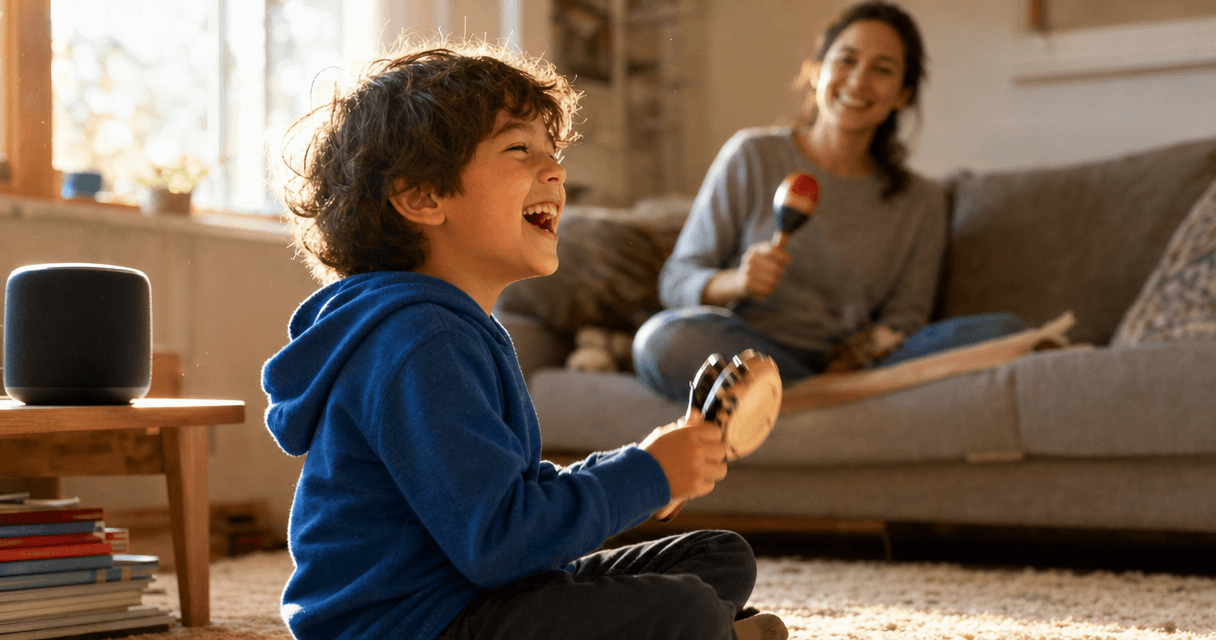
Spanish songs transform language lessons into memorable, engaging experiences that help children retain vocabulary and build confidence. Research shows that pairing vocabulary with song and movement significantly improves retention in young learners, making music one of the most effective tools for language acquisition. Your child absorbs Spanish naturally through rhythm, repetition, and melody.
Key takeaways
- Music activates multiple brain areas, strengthening memory and making vocabulary easier to recall.
- Songs naturally encourage repetition, which builds pronunciation skills and confidence.
- Rhythm helps children internalize Spanish sentence patterns and speech flow.
- Children often feel more comfortable singing words before speaking them in conversation.
- Pairing songs with movement creates multi-sensory learning that sticks.
Why Spanish songs work for language learning
Your child's brain responds to music in ways that make language learning easier. When speech and music combine in singing, both brain hemispheres cooperate—the left for language and the right for music. This dual activation strengthens neural pathways and helps new words stick.
Melody serves as a memory aid. Think about how easily your child memorizes a favorite song compared to a list of vocabulary words. The tune creates a mental hook that makes recall effortless.
Repetition is built into every song. Children hear the same phrases multiple times without it feeling like drill work. A study found that children who listened to vocabulary being sung had significantly higher vocabulary gain than children who only heard it spoken. The natural repetition in music enables the brain to remember learned content.
Songs build pronunciation confidence
Spanish songs help children acquire correct pronunciation because songs prolong vowel sounds, allowing kids to hear and produce them accurately. Spanish vowel sounds are essential to clear communication, and music gives children extended practice with each sound.
Children often feel more comfortable singing words before speaking them in conversation. Singing removes the pressure of perfect performance. Your child can experiment with sounds, rhythm, and intonation in a low-stakes environment.
Songs also teach how Spanish words link together when the final syllable of one word combines with the first syllable of the next. Children learn to pronounce these linked words correctly through singing, then transfer that pronunciation to everyday speech.
Choose the right songs for your child's level
Not every Spanish song serves the same learning purpose. Match the song to where your child is in their Spanish journey.
For beginners
Start with simple, repetitive songs that teach concrete vocabulary. Songs about body parts, colors, numbers, or daily routines work well. "Cabeza, Hombros, Rodillas y Pies" (Head, Shoulders, Knees, and Toes) pairs physical movement with Spanish vocabulary, creating a multi-sensory learning experience.
Look for songs with slower tempos and distinct pronunciation. Your child needs time to process each word.
For intermediate learners
Move to songs that tell simple stories or describe sequences of actions. These songs introduce more complex sentence structures and verb tenses. Folk songs that describe cultural traditions help build listening comprehension while introducing cultural context.
Songs about emotions, daily routines, or family relationships help children connect Spanish vocabulary to their everyday experiences.
For advancing speakers
Older children benefit from songs with richer narratives and more sophisticated vocabulary. Pop songs, traditional ballads, or songs that explore themes beyond basic vocabulary challenge them to understand context clues and infer meaning.
Make songs interactive, not passive
Simply playing Spanish music in the background has limited impact. Active engagement transforms songs into powerful learning tools.
Encourage movement. Have your child act out song lyrics through gestures, dance, or simple props. Physical activity enhances memorization and makes abstract words concrete.
Sing along together. Model pronunciation and participation. Your child will feel more confident joining in when you sing alongside them.
Create visual aids. Draw pictures representing key vocabulary from the song. Visual song charts help children connect words to images, strengthening recall.
Use songs as conversation starters. After singing about animals, ask your child which animal is their favorite in Spanish. Extend the vocabulary from the song into real dialogue.
Repeat favorites. Children learn through repetition. When your child loves a song, play it often. Each listen reinforces vocabulary and pronunciation.
Pair songs with a real teacher
Songs are a powerful supplement, but they work best alongside structured learning with a real teacher. Music builds familiarity and confidence with sounds and vocabulary. A teacher helps your child use those words in conversation, corrects pronunciation gently, and builds on what the songs introduce.
Your child might sing "¿Cómo estás?" perfectly in a song but need guidance using it in a real exchange. A teacher bridges that gap.
At Spanish For Us, our native-speaking teachers incorporate songs, games, and interactive activities into 1-on-1 classes designed to keep kids engaged. Music is part of the lesson, not a replacement for the relationship that helps your child actually speak.
Sources
- Music Vocabulary for Kids: Practical Teaching Ideas That Work — Bookr Class, 2024
- 13 Best Spanish Songs for Kids and Teens to Learn Spanish — Let's Speak Spanish, 2024
- Best Spanish Songs for Kids — TruFluency Kids, 2023
- Spanish Songs for Kids Learning Language — Spanish Playground, 2019
Frequently Asked Questions
What if my child won't sing along at first?
That's completely normal. Many children need time to absorb the language before they feel comfortable producing it. Let your child listen and move to the music without pressure to sing. Some kids will hum, clap, or do the motions long before they join in with words. Keep playing songs they enjoy, and participation will come naturally.
How long should we listen to Spanish songs each day?
Start with 10-15 minutes a day and follow your child's interest. If they're engaged and asking for more, extend the time. If they resist, keep sessions short and playful. Consistency matters more than duration—a few minutes daily builds familiarity better than an occasional long session.
Do I need to translate the lyrics for my child?
Not always. Let your child absorb the sounds and rhythm first. Use gestures, pictures, or actions to convey meaning without translating every word. If your child asks what something means, explain briefly in context. The goal is comprehension through repetition and context, not word-by-word translation.
Can songs alone make my child fluent in Spanish?
Songs build vocabulary, pronunciation, and comfort with the language, but fluency requires conversation practice with a real person. Music is a powerful supplement that makes learning enjoyable and reinforces what your child learns in structured lessons with a teacher. Think of songs as the warm-up, and conversation as the main event.
Ready to get your child speaking Spanish?
Book a free 1-on-1 class with a native-speaking teacher. No commitment, no credit card.
Try a Free Class